



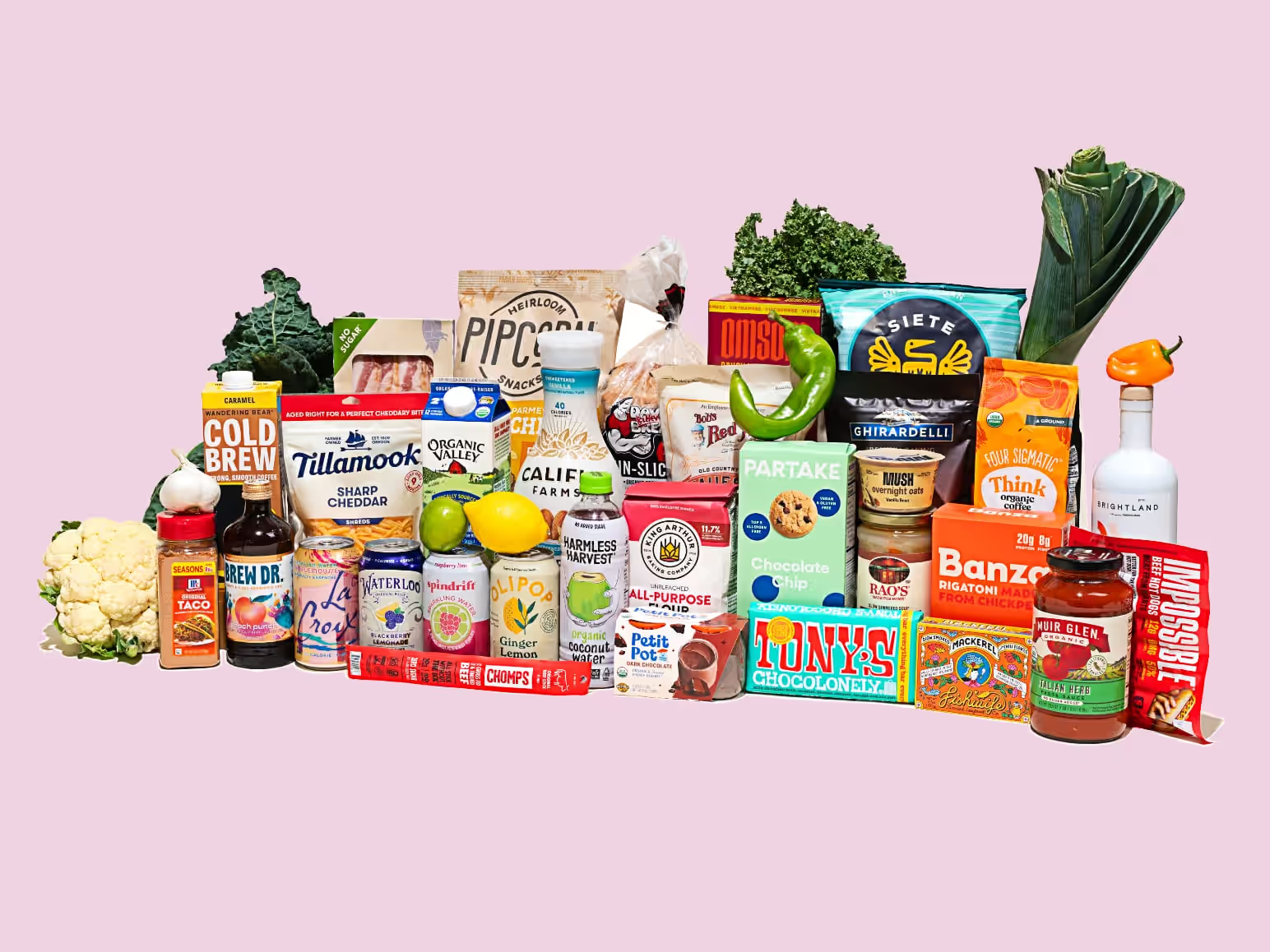
Groceries have been quietly (ok, not that quietly) creeping up in price. The U.S. Bureau of Labor Statistics says “food at home” was still up 2.7% year over year as of August 2025, and meat/poultry/fish/eggs rose even faster—5.6%. That tracks with what my receipt has been screaming at me.
So I ran a one-month experiment. Five small behavior changes netted me about $155 in savings without coupon clipping marathons or eating sad food. Below is exactly what I did, why it works (with credible sources), and a handful of pro moves to layer on. I’ll sprinkle in a few “learned the hard way” notes too—because, same.
1) I paused delivery apps and went back in-store (+$80)
Convenience is awesome—until you realize you’re paying delivery fees, tips, and higher item prices. Industry reporting shows delivery intermediaries often charge retailers double-digit commissions (15–30%), costs that can boomerang back to you as markups. Translation: the same yogurt costs more in the app than on the shelf.
What I changed: one in-store shop every 1–2 weeks for staples and produce. If I truly need delivery (sick kid, zero time), I order from a retailer that shows in-store parity pricing, pick the lowest-fee window, and keep the cart under a hard cap.
My math: On a ~35-item haul, I was seeing $1–$2 per item in quiet markups + fees. Cutting 40 items × ~$2 = ~$80 saved.
2) I made 3 vegetarian dinners per week (+$25)
Beans, eggs, lentils, tofu: protein without the premium. Large studies have found that diets with less meat can be cheaper—Oxford researchers put flexitarian savings around 14%, with vegetarian/vegan diets often saving even more. Bonus: better environmental profile, per Harvard research.
What I changed: swapped one bolognese for marinara + cannellini beans; did a sheet-pan veggie “shawarma” with yogurt sauce; and a lentil curry with rice. Nobody revolted, promise.
My math: Replacing 3 meat-centric mains/week trimmed ~$6–$8 per meal for my crew ≈ ~$25/month (conservative).
3) I consolidated trips into one big shop (+$20)
Every “quick stop” was an impulse trap. One weekly (or biweekly) haul slashed those add-ons and forced me to “make do” if I ran out of, say, soy sauce. (Worcestershire is a weirdly good stand-in.)
Why it works: Fewer exposure moments = fewer impulse buys. A shopping list helps structure choices and limit unplanned items—a 2015 study even linked lists with healthier (and more budget-friendly) carts.
4) I wrote a list—and stuck to it (+$20)
I planned breakfast/lunch/dinner for the week, then built a list straight from the recipes. If it wasn’t on the list, it didn’t hop in the cart. (RIP, truffle butter. I still love u.)
Pro tip: Add unit price checks to your list routine—the tiny “per oz/per lb” number on shelf tags is your best friend for apples-to-apples savings. NIST even has a best-practice guide for unit pricing because it’s that effective.
5) I shopped solo whenever possible (+$10)
Love my kids; love my budget more. When they come, the yogurt-covered raisins somehow multiply. Solo trips = fewer “please please.”
Bonus Moves That Stacked Even More Savings
- Tackle food waste (the silent budget killer). The EPA pegs wasted edible food at $728 per person/year—~$2,913 for a family of four (~$56/week). Use an “Eat-First” bin, freeze leftovers, and plan “scrap meals” (frittata, soup, fried rice). :
- Know shrinkflation when you see it. Packages get smaller while prices stay put—unit pricing exposes it fast. (Also: store brands are typically fine for staples.)
- Skew plant-forward by default. Even nudging toward flexitarian saves money on average and lowers impact.
- Use credit—not debit—at unfamiliar sites. Credit cards give you stronger dispute rights under the Fair Credit Billing Act if an order goes sideways.
- Reality-check the macro picture. If your bill “feels” higher, you’re not imagining it—BLS shows grocery categories like meats and beverages have led recent increases. Plan accordingly (swap proteins, buy in bulk when unit price wins).
My One-Trip Grocery Template (Copy/Paste)
Plan: 7 dinners (3 veg, 2 poultry, 1 fish, 1 leftovers), 2 lunch repeats, 2 breakfast repeats, fruit + snack rotation.
- Proteins: lentils, beans, eggs, chicken thighs, canned tuna
- Carbs: rice, pasta, tortillas, oats, potatoes
- Veg: “heavy lifters” (carrots, onions, cabbage), leafy greens, frozen veg
- Dairy/alt: milk or alt, plain yogurt, block cheese
- Flavor kit: tomato paste, soy or Worcestershire, garlic, curry paste, lemons
Micro-habit that helped: I keep a tiny “use-it-up” note on the fridge (half jar salsa, wilting cilantro, the last two tortillas). Those appear in Thursday’s dinner—zero waste, $ saved.
Receipt Reality: Where the $155 Came From
| Change | Monthly Save (approx.) |
| Skipped delivery markups/fees for big hauls | $80 |
| 3 vegetarian dinners/week | $25 |
| One consolidated shop (fewer impulse buys) | $20 |
| List + unit pricing focus | $20 |
| Shopping solo | $10 |
| Total | $155 |
Bottom line: You don’t need to overhaul your life to cut your bill. One in-store haul, a stricter list, a couple meat-free dinners, and a little food-waste judo can out-save most coupon stacks. And if your ground beef still looks wild this week—you’re not wrong; the numbers back you up. :contentReference[oaicite:10]{index=10}


