


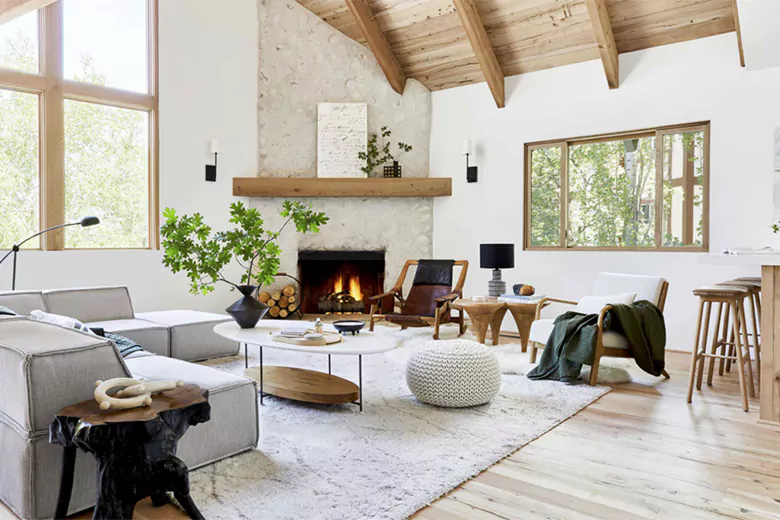
I grew up with an interior designer mom, which meant my “after-school activities” were more like mini field trips through rug wholesalers and lamp warehouses. I didn’t love it then (dusty warehouses aren’t exactly a playground), but years later—after working alongside designers who chased every it-pattern and others who stuck to timeless silhouettes—I realized the big lesson she was quietly drilling into me: the best living rooms are built on enduring foundations, while trends get layered in like seasonal accessories. In 2025, with styles cycling faster than a TikTok sound, that lesson matters even more.
Below is a practical, evidence-backed guide to help you decide where to invest, where to experiment, and how to keep your space feeling current through 2030 without constantly replacing big-ticket items. I’ll translate the buzzy “Coastal Scandifornia” look into something liveable, give you specs you can actually use in-store, and link to trustworthy sources so you don’t have to guess. Also, I’ll be honest where it’s more art than science (because homes are for humans, not showrooms, and sometimes we just like what we like—even if it’s a little weird).

The 60/30/10 Living Room Framework
Think of your budget and attention in thirds—it’ll save you from regret (and reduce waste):
- 60% on “forever” pieces: neutral sofa, classic accent chairs, a well-made rug, high-quality window treatments. These anchor the room for years.
- 30% on “medium-term” layers: lighting, side tables, ottomans, a media console you won’t mind swapping in 5–7 years.
- 10% on “revision” items: pillows, throws, art prints, lampshades, and objects that can rotate seasonally.
Why this matters: Americans toss millions of tons of furniture each year, and the majority ends up in landfills. The EPA estimates furniture and furnishings generated roughly 12 million tons of waste in 2018, with more than 80% landfilled (EPA). Buying durable core pieces—and swapping small accents when trends shift—lowers your cost-per-use and your footprint.
Trend Decoder: What “Coastal Scandifornia” Actually Means
It’s not a gimmick; it’s a mash-up of Scandinavian simplicity (honest materials, calm palettes, clean lines) and California coastal ease (sun-friendly textures, woven elements, relaxed silhouettes). The vibe is light, tactile, and quietly warm. Think sand, bone, driftwood, olive, with black or oil-rubbed bronze accents for definition. Layer stripes and organic shapes so it feels collected, not contrived.

Rule 1: Start with a neutral, durable sofa (your forever canvas)
A neutral sofa—white, bone, beige, taupe, greige, mushroom—anchors your room and lets you change the mood with textiles. Your cushions and throws can handle the 2025–2026 pattern party (bouclé, florals, stripes); your sofa shouldn’t have to. A few specs that actually matter in-store:
- Fabric durability: Look for 15,000+ double rubs (Wyzenbeek) for typical residential, 30,000+ for heavy use. Check the ACT performance guidelines for abrasion, pilling, and lightfastness.
- Cleaning and health: “Performance” finishes are convenient, but verify safety. California’s TB117-2013 eliminated the need for certain flame retardants in upholstered furniture—always confirm current labels (California BHGS TB117-2013). For low emissions, look for GREENGUARD or similar certifications.
- Construction: 8-way hand-tied or quality sinuous springs both work when executed well; kiln-dried hardwood frames last longer than softwood or particleboard.
- Comfort geometry: Typical seat height 17–19 inches, seat depth 21–24 inches; test with the shoes you actually wear at home. If you’re under 5’6”, try 20–21 inch depth or add a lumbar pillow.
- Slipcovers: If you love light colors but fear stains, consider a tailored slipcover—washable and very 2030-proof.
Want a second opinion before you buy? The New York Times’s Wirecutter has an approachable, well-researched sofa guide that’s updated regularly (Wirecutter Sofa Buying Guide).

Rule 2: Treat lighting as both art and science
Lamps are the exclamation points of your living room—easier to change than a sofa but powerful enough to set the mood. Go sculptural or playful if you like; just respect the physics of light. Layer three types:
- Ambient: Ceiling fixtures or large shaded lamps to evenly light the room.
- Task: Floor lamps beside reading chairs; table lamps near conversation zones.
- Accent: Picture lights, small spotlights, or backlighting to create depth and drama.
Specs to watch: Warm-white LEDs (about 2700–3000K) feel cozy for living spaces; higher color temperatures can read clinical at night (U.S. DOE on LEDs). Dim everything you reasonably can—dimming supports evening wind-down and saves energy. If you’re curious about health, the WELL Building Standard explains why dynamic and well-placed light matters for circadian rhythms and comfort (WELL v2 Light). The Illuminating Engineering Society also advocates a layered approach for residential environments (IES).

Rule 3: Keep patterns tonal and vary scale
Patterns can make or break a room. The 2025 move is to keep them in the same general palette—earthy browns, grays, olives, creams—so stripes, florals, and geometrics layer without getting loud. Vary the scale: a wide cabana stripe on an ottoman, a small floral on pillows, a micro-geo on a lampshade. It looks intentional, not chaotic.
There’s a cognition angle here too: visual clutter can tax your brain and increase perceived stress. UCLA’s research on everyday home environments found that cluttered spaces correlate with higher cortisol in families (UCLA, Life at Home in the 21st Century). Tonal patterning keeps richness without the overwhelm.

Rule 4: Elevate the windows with texture (linen, tweed, velvet)
Breezy cotton sheers are timeless, but textured drapery is what makes a living room feel tailored in 2025. Rough linens, basket-woven tweeds, wool blends, or even lightweight velvets function like a blazer over a white tee—immediately more polished. Bonus: lined curtains can help with thermal performance and glare control. The Department of Energy notes that appropriate window coverings can reduce heat gain in summer and heat loss in winter (DOE on Window Coverings).
- Mount high and wide: Hang rods 6–12 inches above the frame and extend 6–12 inches past each side to make windows appear larger.
- Length: “Kiss” the floor or break slightly; puddling is pretty but higher maintenance.
- Lining: Blackout for TV rooms; privacy lining where you want diffused light without silhouettes.
Rule 5: Choose accent chairs that will age gracefully
Accent chairs are the supporting actors—they set the tone beside your “lead” sofa. Prioritize honest materials and timeless silhouettes: clean-lined wood frames, woven cane, and aniline leather read classic and get better with patina. Look for FSC-certified wood to support responsible forestry (FSC) and upholstery with appropriate abrasion ratings (ACT). Proportions matter: seat height 16.5–18.5 inches for lounge chairs, with at least 30–36 inches of circulation space in high-traffic paths.
Once the base is timeless, have fun with what you drape over it—a plaid throw in fall, linen pillow in summer. Buy the chairs once, style them endlessly. And yes, I defintely keep a spare lumbar pillow in a drawer for when guests pop by.

Layout and proportion: quick checks you’ll use in every room
- Rug sizing: Front legs of seating on the rug (at minimum). In small living rooms, an 8×10 often beats a 5×8; leave a consistent 8–18 inch border to the wall depending on room size.
- Coffee table: Roughly two-thirds the sofa width; height equal to or up to 2 inches below the sofa seat height; 14–18 inches of knee clearance.
- Walkways: Aim for 30–36 inches of clear path in main routes.
- TV viewing distance: For 4K sets, roughly 1–1.5 times the screen diagonal; for a 65-inch TV, ~5.5–8 feet (see THX viewing guidance).
- Lighting rule of thirds: At night, you should be able to switch on at least three sources (ceiling, floor, table) without the room feeling flat.
Materials, health, and sustainability (the stuff future-you will appreciate)
- Low-VOC finishes and adhesives: Ask for emissions certifications (e.g., GREENGUARD) to support indoor air quality.
- No unnecessary flame retardants: Check labels for compliance with TB117-2013 and ask manufacturers about chemical treatments.
- Responsible wood: FSC-certified frames and casegoods when possible.
- Textiles you can care for: Removable cushion covers or slipcovers extend product life; follow ACT cleaning codes.
- Repair > replace: Reupholstery and cushion refills keep furniture in circulation. Remember the EPA’s furniture waste stats (EPA).
2025–2026 micro-trends with long legs
- Texture-forward neutrals: Tweed, slub linen, and bouclé on pillows/throws (not permanent upholstery) to keep maintenance reasonable.
- Sculptural lighting: Ceramic, wicker, and metal hybrids—treat lamps like art you can move.
- Tonal stripes: On ottomans, benches, or slipcovers; pair with small-scale florals in the same palette.
- Warm woods: White oak, walnut, and ebonized accents for contrast; avoid overly gray finishes that can date quickly.
- Human-centered comfort: Soft edges, rounded corners, and forgiving fabrics—aligned with broader wellness-in-design movements noted by industry orgs like ASID and performance lighting guidance from WELL and IES.
If you want to go deeper into macro shifts (aging-in-place, wellness, material circularity), check the American Society of Interior Designers research library for annual trend outlooks (ASID Research).
Putting it all together: a simple plan you can follow this weekend
- Audit your anchors: If your sofa or chairs are failing, replace those first with neutral, well-constructed options. Verify abrasion ratings and frame materials (see ACT).
- Dial in the light: Swap to warm 2700–3000K LEDs and add dimmers (DOE). Add one sculptural lamp that makes you smile.
- Soften the envelope: Hang textured drapes high and wide; add a properly sized rug so the room reads cohesive.
- Curate the layers: Limit your pattern palette to 2–3 tones; vary scale across pillows, ottomans, and lampshades.
- Edit without fear: If an accessory doesn’t earn its keep, store or donate it. Your brain will thank you (really—see UCLA’s findings).

Homes evolve—and they should. If you lock down the foundation (sofa, chairs, rug, drapery) and treat trends like rotating accessories (lighting, pillows, patterns), your living room will feel current in 2025 and still authentically you in 2030. And if one rule bugs you? Break it. The only real mistake is designing a space that pleases Instagram more than it pleases the people who actually live there. Youre the one turning on the lamp at 8 p.m., after all.


