


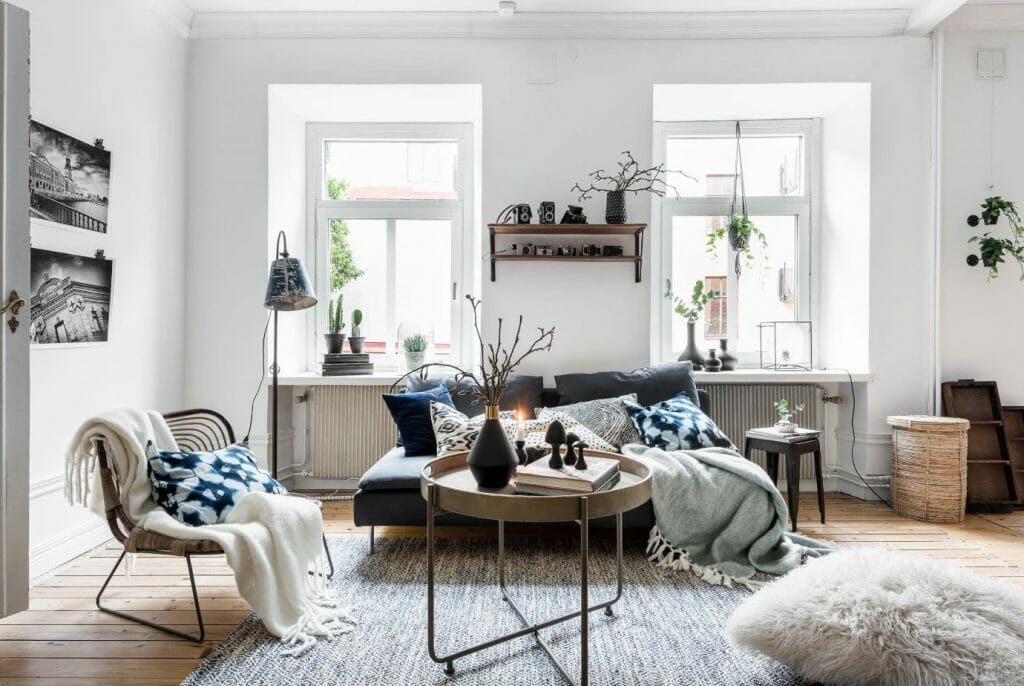
Wool socks, cocoa mugs, a crackling fire—the cliché version of hygge practically smells like pine and cinnamon. But here’s the truth: hygge isn’t a winter-only mood board. It’s a year‑round approach to comfort, connection, and simplicity that you can dial up in July just as easily as in January. And it’s not just fluff; many hygge‑forward choices align with what we know from environmental psychology, sleep research, and good old‑fashioned human factors.

Quick refresher: Hygge (pronounced “HOO‑guh”) is a Danish word often translated as “coziness,” but most Danes describe it as a feeling of togetherness, presence, and ease. See the dictionary definitions if you like receipts: Merriam‑Webster, Cambridge. And for cultural context, Denmark’s own tourism bureau has a helpful primer (VisitDenmark). Meik Wiking of the Happiness Research Institute has popularized the concept globally—framing hygge as an everyday practice that supports well‑being.
What Hygge Is (and Isn’t)
- Is: Simple, tactile comfort; unforced togetherness; everyday rituals that make life feel softer.
- Isn’t: Precious styling for Instagram; excessive symmetry; an excuse to buy 27 candles without any ventilation (please don’t).
- Is: Seasonless—warmth in winter, breezy ease in summer.
- Isn’t: Maximal clutter. Editing is a love language here.
12 Evidence‑Informed Styling Ideas That Work in Any Season
Below are the classic hygge moves—expanded, updated, and grounded in research where it matters. I’ve added a few notes from practice (and one or two honest admissions—because a “perfectly” rumpled bed is a paradox, amirite?).
1) Start with natural materials—and layer textures like a pro
Rustic woods are a hygge cornerstone. Choose responsibly sourced pieces (look for FSC certification). Then build tactile layers: coarse linen table runners, chunky wool throws, nubbly cotton cushions. Natural fibers regulate temperature and moisture better than synthetics, helping comfort feel, well, effortless. If you love the look of sheepskins or hides, consider ethical standards like the Responsible Wool Standard—or go faux for easy care.

2) Embrace a little quirk: mismatched dining chairs
Scandinavian interiors have a wink. Mix a mid‑century icon with two bentwood bistro chairs and a petite stool. The result feels collected and personal—not showroom sterile. From a design standpoint, varied silhouettes add visual rhythm and invite conversation because the setting feels less formal and more human‑scale.

3) Leave the bed a little undone (tactically)
Hygge bedrooms skip hospital corners. Layer breathable linens and a textural blanket, and let things stay slightly mussed and nap‑ready. For sleep quality, prioritize breathable fibers and darker evenings. Blue‑light control and consistent light cues support circadian health (Harvard Health; AASM). My take: Keep the rumple, add blackout liners if mornings are too bright, and wash bedding frequently if you have allergies.

4) Bring in nature—quietly
Hygge favors simple, organic greenery: a row of bud vases with clipped herbs, a sculptural branch on a coffee table, meadowy stems over big, formal bouquets. Interacting with plants can gently reduce stress in some contexts (Journal of Physiological Anthropology; Bringslimark et al.). Note: Houseplants are not air‑purifiers in real‑world volumes, despite viral claims (Cummings & Waring, 2019), so ventilate and choose low‑VOC finishes (EPA).

5) Green at the foot of the bed
A potted plant by the bed’s foot adds life without crowding your headboard. An asparagus fern or low, feathery green keeps sightlines soft. Just verify pet‑safety by species and use a saucer—water stains are the opposite of cozy, trust me.

6) Keep the palette calm (but not flat)
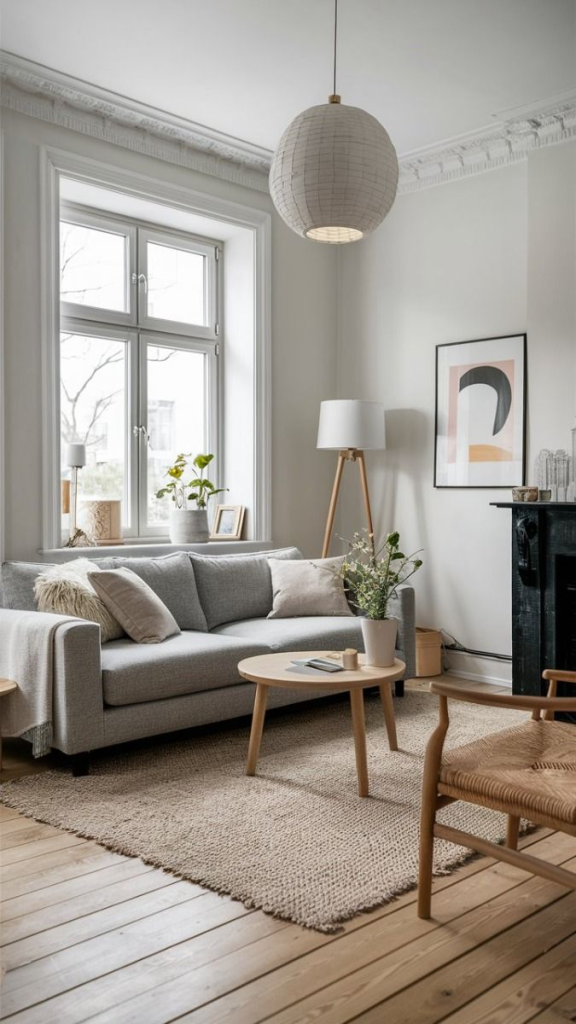
Think charcoal rug, heathered sofa, soft dove‑gray walls and drapery. Neutrals with mixed textures feel richer than a single “builder gray.” Color psychology is nuanced, but evidence suggests color context affects perception and mood (Elliot & Maier, Annual Review of Psychology; Frontiers in Psychology). Translation: quiet hues, high texture.
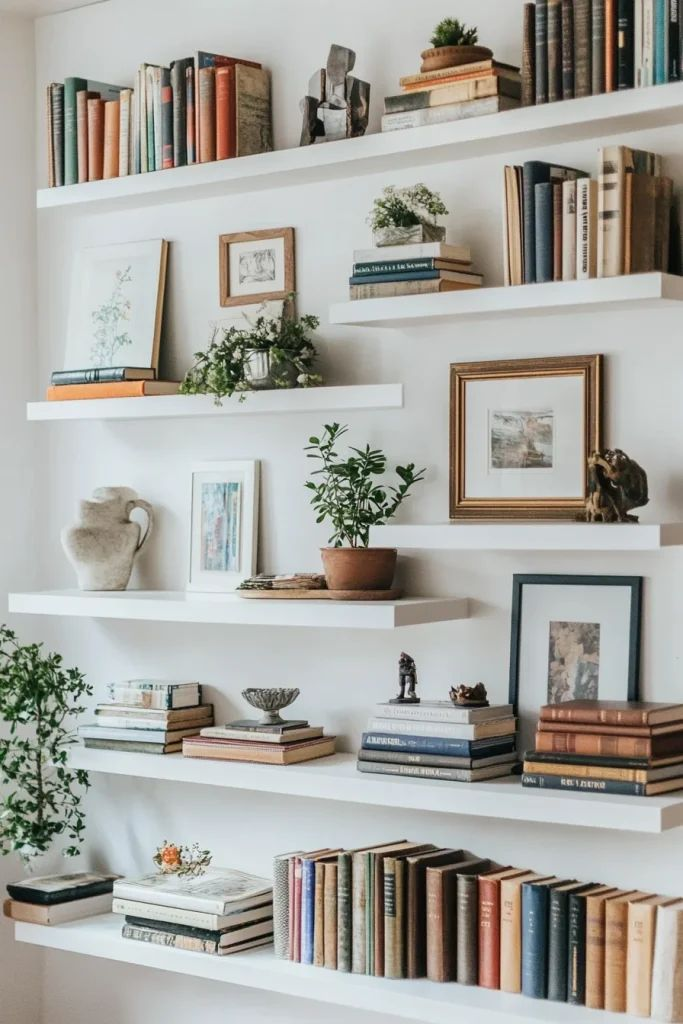
7) Edit your shelves; reduce visual noise
Instead of treating bookshelves as catch‑alls, keep accessories monochrome and negative space intentional. If you do the “white spines out” trick to lower visual clutter, use discreet labels or a catalog app so you can still find your books. Clutter is linked with stress and cortisol spikes in everyday life (Saxbe & Repetti, 2010), so the calm you feel isn’t imaginary.
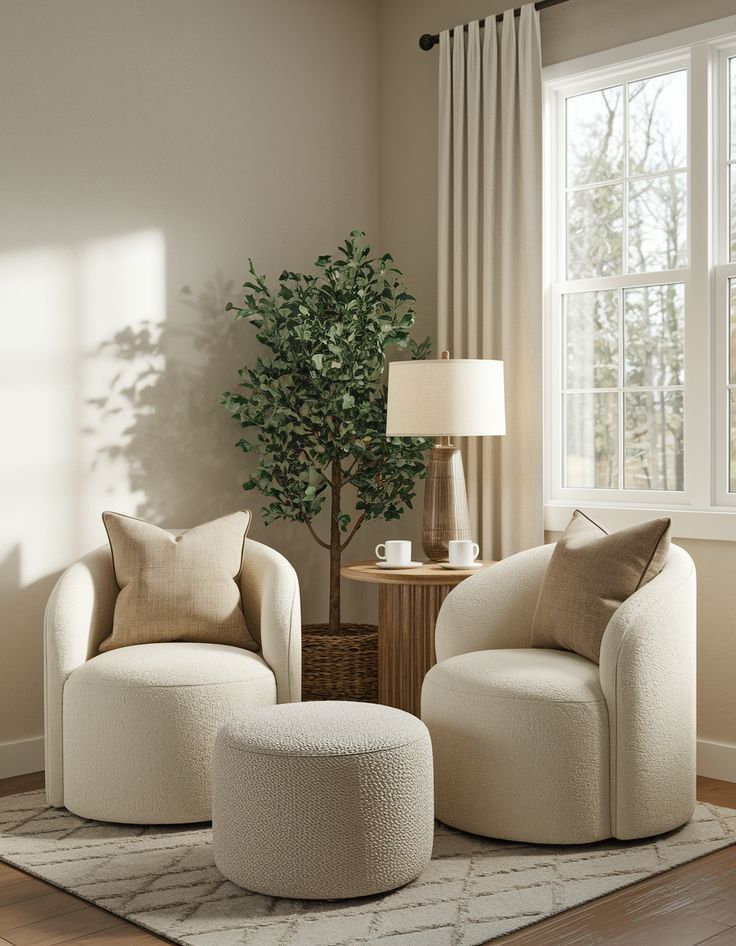
8) Skip strict symmetry; group seating close for connection
Hygge seating works like a cozy campfire: drawn in and conversation‑forward. Asymmetry feels informal and human. From a social‑space standpoint, tighter conversation distances encourage warmth (proxemics, Britannica). Try a love seat and two chairs pulled closer than you think, with a low table that actually serves snacks and board games.
9) Maximize daylight; layer warm light at night
Long Nordic winters are dark—Copenhagen sees very short days in December (timeanddate.com; Danish Meteorological Institute). Hence the design emphasis on daylight: pale walls, sheer window treatments, mirrors opposite windows. At night, hygge leans warm and low: 2200–2700K bulbs, dimmers, multiple small lamps instead of one overhead glare bomb. If you love candles, keep it safe (NFPA candle safety) and ventilate; wood fires need proper appliances and dry wood (EPA Burn Wise).

10) Use smaller rugs to define intimate “gather” zones
While large rugs can make rooms feel expansive, hygge often favors petite rugs to “hug” a seating nook or kitchen prep spot. Layering a small wool kilim over a natural‑fiber base rug adds both texture and psychological warmth. Do add a rug pad; trip hazards are not cozy.

11) Curate scent, sound, and touch
Hygge is multisensory. A subtle cedar or citrus candle, a playlist that’s more acoustic than algorithmic, and a basket of throws within arm’s reach. If fragrances bother you (same), try simmer pots or fresh herbs instead of synthetic scents; they’re gentler on indoor air (EPA on VOCs).
12) Practice “summer hygge” outdoors
Lanterns on a balcony, a small grill, a basket of throws for cool nights, iced tea instead of cocoa. Hygge is the ritual, not the temperature. Honestly, the best summer hygge I’ve had was a simple picnic on the floor with the windows open and a thunderstorm rolling in—zero styling, maximum vibe.

Room‑by‑Room Quick Wins
- Entry: Bench + hooks + a tray for keys. One plant. Done.
- Living: Three light sources minimum (task, ambient, accent). Pull seating closer.
- Dining: Mismatched chairs; low centerpiece that doesn’t block faces.
- Kitchen: Small rug at prep zone; a crock of wooden spoons; fresh herbs in the window.
- Bedroom: Layered linens, soft rug at bedside, blackout liners for sleep health (AASM).
- Bath: Cotton towels, a stool for a candle/tea (never near fabric), clutter corralled in baskets.
Sustainability and Safety (Because Cozy Should Be Kind)
- Choose certified wood (FSC) and low‑VOC finishes (EPA Safer Choice).
- Ventilate when burning candles or using a fireplace (EPA Burn Wise); keep candles away from drafts and flammables (NFPA).
- Textiles: Look for OEKO‑TEX certification to reduce chemical exposure (OEKO‑TEX).
Common Mistakes (I’ve made a few)
- Over‑styling. Hygge should feel lived‑in, not staged. One imperfect thing (a nicked wood table) can be a feature, not a bug.
- Too much open flame, too little fresh air. Safety first, always.
- All gray everything. Mix warm woods, creams, and soft greens so spaces don’t feel cold.
- Clutter creep. If the shelf looks busy, it is busy. Edit weekly. It’s boring advice, but it works, definitley.
Hygge vs. Similar Ideas
- Lagom (Swedish): “Just the right amount”—more about balance and sufficiency.
- Koselig (Norwegian): Cozy warmth with an emphasis on nature and togetherness (close cousin).
- Minimalism: Visual simplicity; can be hygge‑friendly if it makes daily life easier rather than stricter.
A 10‑Minute Hygge Reset You Can Do Tonight
- Open a window for 5 minutes; reset the air.
- Dim overheads; turn on two lamps; light one candle (safely).
- Clear one surface completely (coffee table or nightstand).
- Throw a textured blanket over the sofa arm.
- Put greens in water: a branch, a few herb stems—anything.
- Queue a mellow playlist. Tea on. Phone face down. That’s it.
Why This Works (The Short Science Bit)
Hygge design leans into what our brains and bodies already prefer: balanced sensory input, social closeness without pressure, predictable light cues, and lower visual complexity. Research connects clutter with stress (Saxbe & Repetti), daylight with mood and sleep (AASM), and nature cues with calm (Physiol. Anthropology). The Danes didn’t over‑engineer this; they just codified what feels good and made it normal, which is kinda the goal.
Further Reading and Useful Links
- What “hygge” means: Merriam‑Webster, Cambridge, VisitDenmark
- Happiness context: Happiness Research Institute
- Daylight in Copenhagen: timeanddate.com, DMI
- Light, sleep, and health: Harvard Health, AASM
- Indoor air and VOCs: EPA, EPA Safer Choice
- Plants & stress (and limits of air cleaning): Physiol. Anthropology, Nature/JESEE 2019
- Fire & candle safety: NFPA, EPA Burn Wise
- Materials: FSC, OEKO‑TEX
Bottom line: Make it simple, make it soft, make room for people—and the rest follows.


