


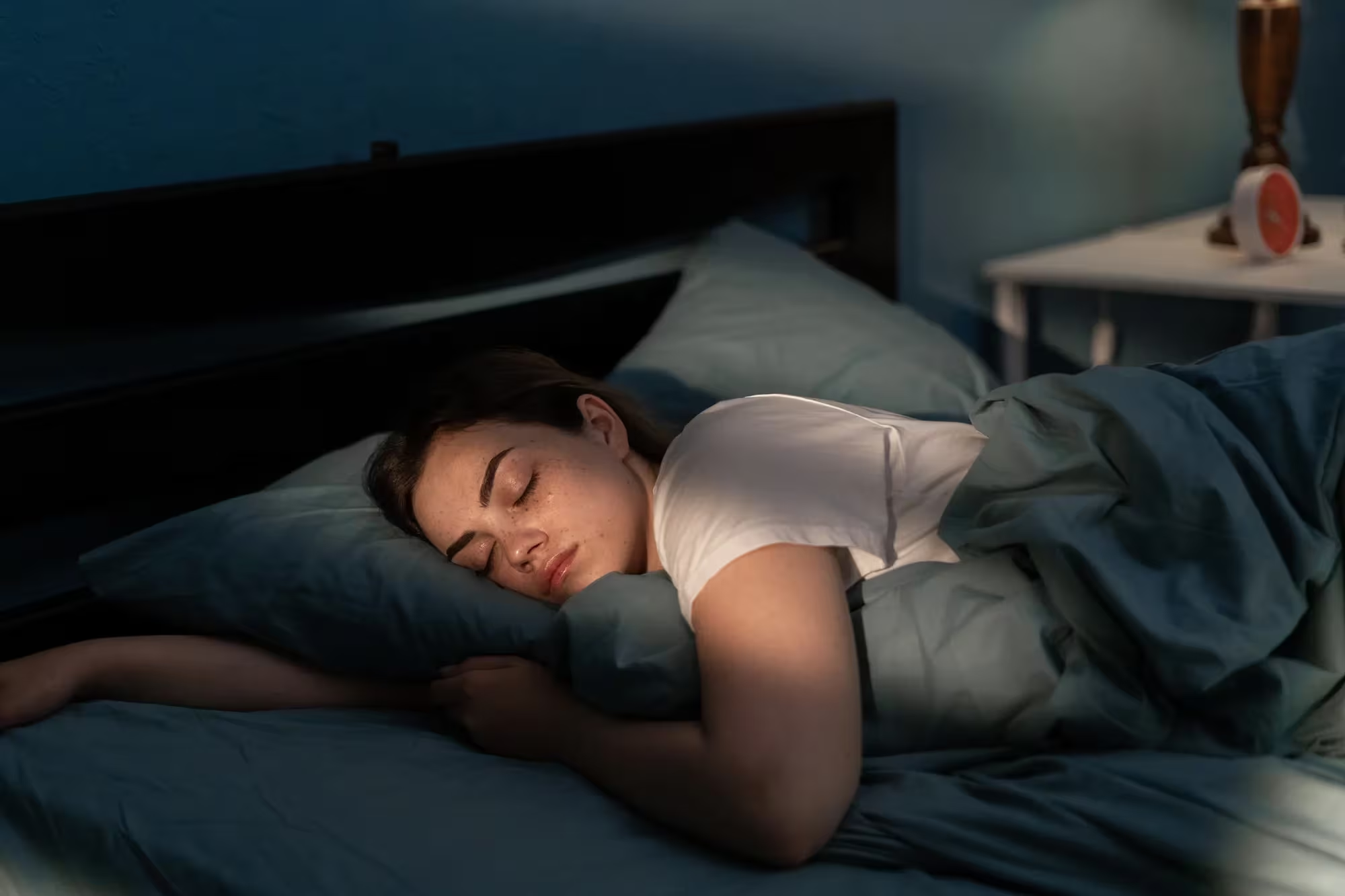
Vetting wellness trends is literally my job. Some are worth your time and money; others…not so much. Over the past few years I’ve tested dozens of sleep hacks and devices. Below are four big sleep trends—three I can confidently recommend, one I’m ready to retire—plus the science, expert guidance, and real‑world tips to help you decide what’s right for you. I’ll sprinkle in my own experiences (and a couple of messy, human thoughts), but you’ll also find links to primary sources so you can read the evidence yourself.
Quick reminder: none of this replaces medical advice. If you suspect a sleep disorder (snoring that wakes you or your partner, gasping, unrefreshing sleep, excessive daytime sleepiness), talk to a clinician or a board‑certified sleep physician. The U.S. Centers for Disease Control and Prevention has a handy primer on how much sleep you need by age: CDC.
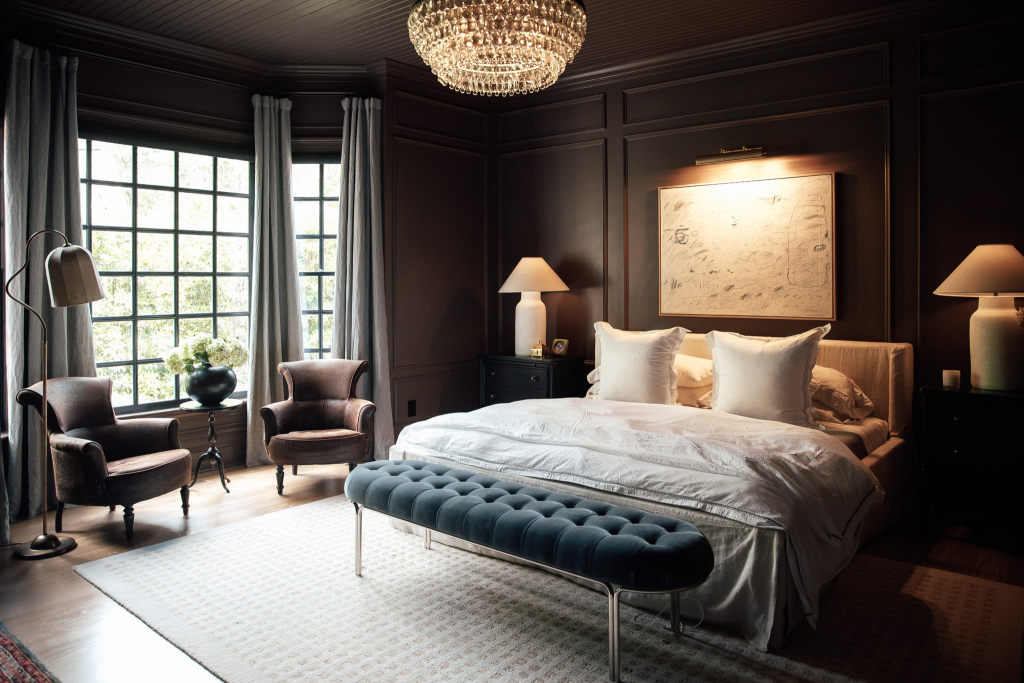
The One Habit Sleep Experts Consistently Tell Me to Avoid Before Bed
Two sleep physicians I trust have told me variations of the same thing: the worst pre‑bed habit most of us have is bright‑screen time (aka doomscrolling). Evening exposure to blue‑enriched light delays melatonin, shifts your circadian clock later, and makes it harder to fall asleep and to wake refreshed. This isn’t just vibes—it’s well documented in lab and real‑world settings (see Harvard Health and AASM clinical guideline on circadian disorders).
Simple fixes that actually help: set your phone to “very dim” and warm color after sunset, stop scrolling 60–90 minutes before bed, and get bright outdoor light soon after waking (strong morning light is a potent circadian anchor; more on that below). If you do only one thing, reduce pre‑bed screen glare. It’s boring advice; it works.
Trend #1: High‑Fidelity Earplugs for Sleep (My Nightly MVPs)
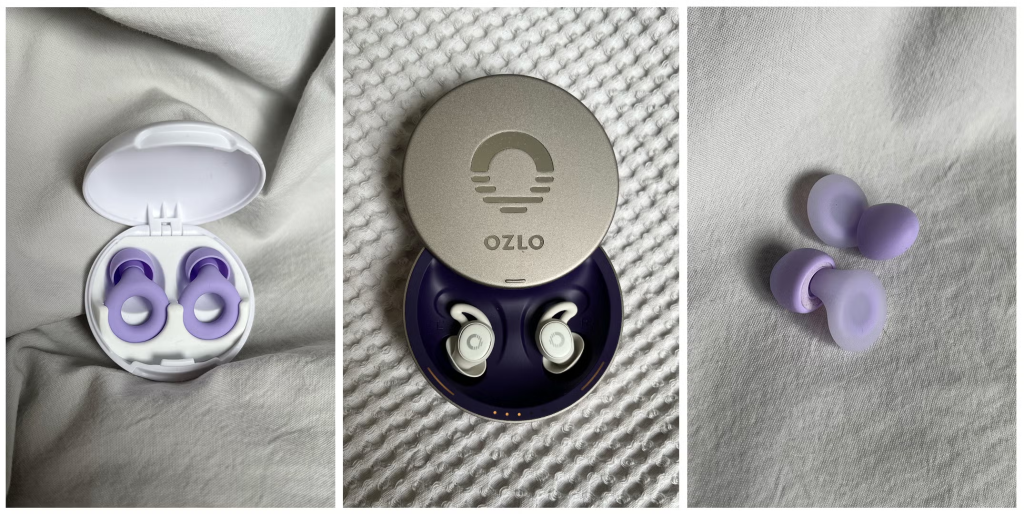
Confession: I used to hate earplugs. The cheap foam cones popped out 17 times a night. Then I tried modern earplugs designed specifically for sleep—think a low‑profile outer ring plus soft memory‑foam or silicone tips that match the ear’s oval shape—and I was converted. I’ve had great results with newer “sleep” models from Loop and similar brands; they’re comfortable even for side sleepers and, for me, they reduce middle‑of‑the‑night awakenings noticeably.
Why they work: Nighttime noise fragments sleep even when it doesn’t fully wake you. The WHO Environmental Noise Guidelines flag nighttime noise as a public‑health issue. In controlled settings, earplugs (often paired with eye masks) improve perceived and measured sleep quality—even in loud environments like ICUs (Hu et al., 2015 systematic review).
What to look for:
- Fit: Multiple tip sizes and an oval/ergonomic design reduce pressure points for side sleepers.
- Noise Reduction Rating (NRR): Higher isn’t always better if it’s uncomfortable; aim for a balance. OSHA/NIOSH explain NRR here: NIOSH.
- Material: Memory foam molds well; silicone can be easier to clean.
- Hygiene: Replace tips regularly to avoid irritation.
Are they “worth it”? For me, yes—even at ~$50, becuase better sleep compounds. YMMV if your room is already whisper‑quiet or if you have ear conditions (ask your clinician if you’re prone to ear infections, eczema, or use hearing aids).
Further reading: Noise and sleep (Sleep Foundation), CDC: About Sleep.
Trend #2: Sunrise Alarm Clocks (Dawn Simulators) to Wake Easier
Traditional alarms jolt you awake; dawn simulators do the opposite by gradually increasing light before your set wake‑up time. The idea aligns with circadian biology: morning light advances your internal clock, supports earlier sleep times, and reduces “sleep inertia” (that groggy, foggy feeling). Clinical guidance from the American Academy of Sleep Medicine recommends appropriately timed light for circadian rhythm disorders (AASM guideline). Expert commentary backs the gentler wake experience, too (see coverage quoting Johns Hopkins sleep specialist David Neubauer in The Washington Post).
How to use:
- Set the “sunrise” to start 20–40 minutes before your target wake time.
- Keep your room otherwise dark (blackout curtains help) so the device light is the primary cue.
- Add sound only if you tend to sleep through light—think gentle birds, not air‑raid siren.
Bonus: Get real daylight within an hour of waking for 10–30 minutes. It’s free, strong, and anchors your circadian rhythm far better than indoor lighting (Harvard Health).
Trend #3: “Sleep Tourism” That Actually Helps (and How to Copy It at Home)
I initially rolled my eyes at sleep‑themed hotel packages. Then I tried a few in the U.S.—pillow menus tailored to your sleep position, recorded wind‑down meditations, blackout shades, and quiet rooms—and I’ll admit it: I was wrong. While not necessary, they can make sleeping away from home more restorative.
Two offerings I’ve liked:
- Mountain Shadows Resort (Scottsdale, AZ): The Moon & Stars Sleep Package includes a silk sleep mask, pillow spray, a sleep journal and more. Details: Mountain Shadows.
- Equinox Hotel (New York City): The Art + Science of Sleep package layers spa treatments with in‑room recovery and sleep optimization. Details: Equinox Hotel.
Why travel sleep can be hard in the first place: the “first‑night effect,” where part of your brain remains on alert in a new environment. It’s a documented phenomenon (Tamaki, Bang & Watanabe, 2016), which is why investing in a familiar pre‑sleep ritual on the road helps.
Steal the best bits at home:
- Optimize the room: cool (60–67°F), dark, and quiet (Sleep Foundation).
- Offer yourself a “pillow menu”: keep two heights/firmnesses to match back vs. side sleeping. Neck alignment matters for comfort and next‑day stiffness (clinical biomechanics research supports neutral alignment).
- Create a wind‑down ritual: write tomorrow’s to‑dos, then 10 minutes of a guided body‑scan or breath work (many are free via academic centers).
PS: If travel budget is tight, a at‑home “sleep staycation” costs little: blackout shades, a $10 notebook, and a library‑card meditation app can get you 80% of the way there.
Trend I’m Not Cosigning: Mouth Taping
I tested mouth taping so you don’t have to. Unless you have a very specific, clinician‑guided use case, I don’t reccomend it. Here’s why:
- Evidence is limited: A few tiny pilot studies suggest tape might reduce snoring in select people with mild issues, but data are small and inconsistent.
- Safety concerns: If you have nasal congestion, allergies, deviated septum, or undiagnosed sleep apnea, taping the mouth can worsen breathing, increase arousals, or be downright unsafe. The American Academy of Sleep Medicine has cautioned against viral mouth‑taping trends without medical supervision (SleepEducation.org, AASM).
- Derm and dental downsides: Skin irritation, lip damage, and (ironically) worsened oral health if it leads to mouth dryness at other times. See Cleveland Clinic’s overview.
What to do instead:
- Address nasal breathing first: saline rinses, allergy management, ENT eval if needed.
- Snoring basics: side‑sleeping, weight management if appropriate, avoid alcohol late, consider nasal dilator strips (limited but better data than tape). Snoring guide.
- If you suspect sleep apnea: get screened and, if indicated, treated (CPAP, oral appliance, etc.)—these are evidence‑based and life‑improving. Start with NHLBI: Sleep Apnea.
Bonus Gear I Love: Sleep Masks (and Why They Matter)
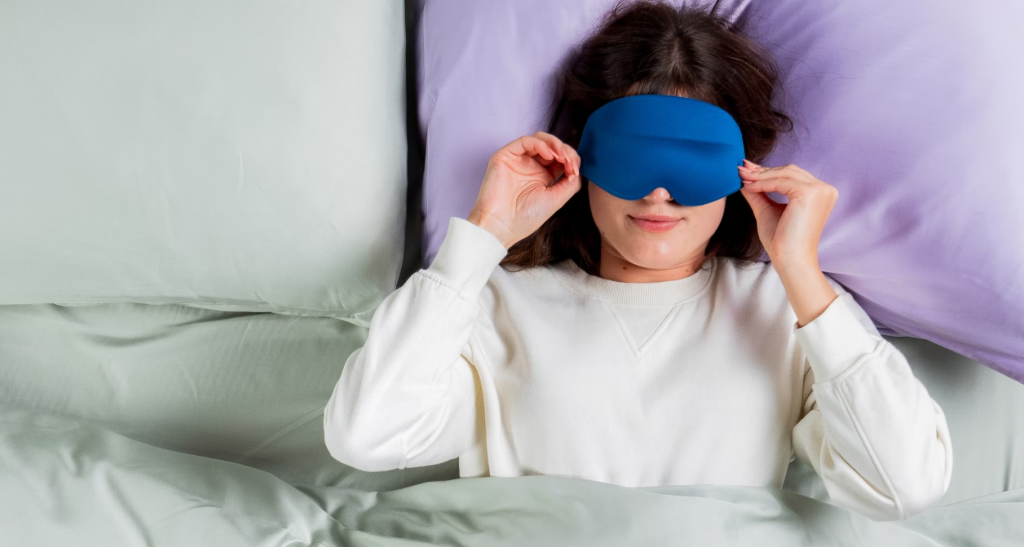
I’ve worn a sleep mask nightly for years. Light—even at modest levels—can suppress melatonin and nudge your clock in the wrong direction. One lab study showed that sleeping in a moderately lit room impaired next‑day cardiometabolic measures compared with very dim light (Northwestern Medicine, 2022). Translation: darker is better.
- Look for: contoured eye cups (so your lashes don’t touch), adjustable strap, and blackout fabric.
- Travel tip: pair a mask with foam or silicone earplugs for a portable sleep cocoon.
How I Test Sleep Trends (So You Know What To Trust)
- Baseline first: I track two “boring” weeks with no changes (bedtime, caffeine cut‑off, exercise, alcohol). Then I add one variable at a time for at least 10–14 nights.
- Subjective + objective: I note night awakenings, time‑to‑sleep, and morning energy (simple 1–10 scale). If a device offers data, great, but I don’t chase meaningless numbers.
- Context matters: If my week is packed or I’m traveling, I extend testing so stress doesn’t confound results.
TL;DR: What I’d Recommend to Most People
- Do less before bed: Kill bright screens 60–90 minutes pre‑sleep; get morning daylight. Sources: Harvard Health, CDC.
- Block noise and light: Quality earplugs + a comfy sleep mask are low‑cost, high‑yield upgrades. Evidence: Hu et al., 2015, WHO.
- Wake with light: A sunrise alarm can make mornings less brutal and nudge your clock in a healthier direction. Guidance: AASM.
- Skip mouth taping: Not enough evidence; real risks for the wrong user. Better: assess nasal airflow, consider positional strategies, and screen for sleep apnea. Sources: AASM, Cleveland Clinic, NHLBI.
Sleep isn’t one gadget away—but the right, evidence‑aligned tools can make the fundamentals easier. And easier is what you’ll stick with.
More credible resources if you want to go nerder: American Academy of Sleep Medicine, NIH—NINDS Sleep Topics, SLEEP Journal.


