


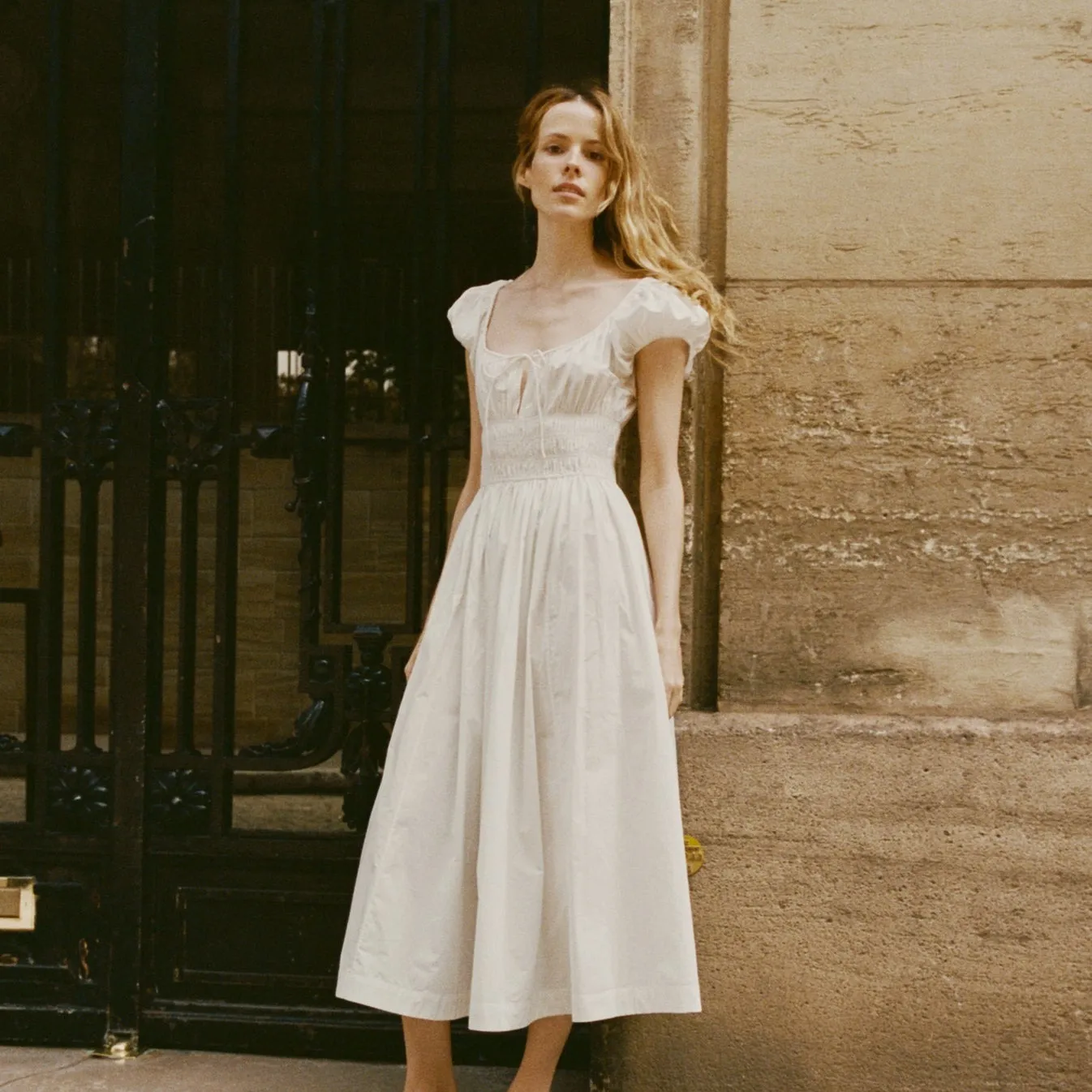
The 10 Best Formal Dresses for Petites (Editor-Tested) + What Actually Works for 5’4” and Under
I’m 5’1”, have worked around fashion and events for about a decade, and I’ve lost count of how many black-tie weddings and galas I’ve attended. The perpetual challenge? Hems that puddle, waists that sit too low, and slits that land in…unexpected places on shorter legs. The good news: With the right silhouettes (and a few smart tricks), you can skip the tailor and still look impeccably polished. Below, I’m sharing the 10 best petite-friendly formal dress options I recommend again and again—plus the research-backed principles that make them work.
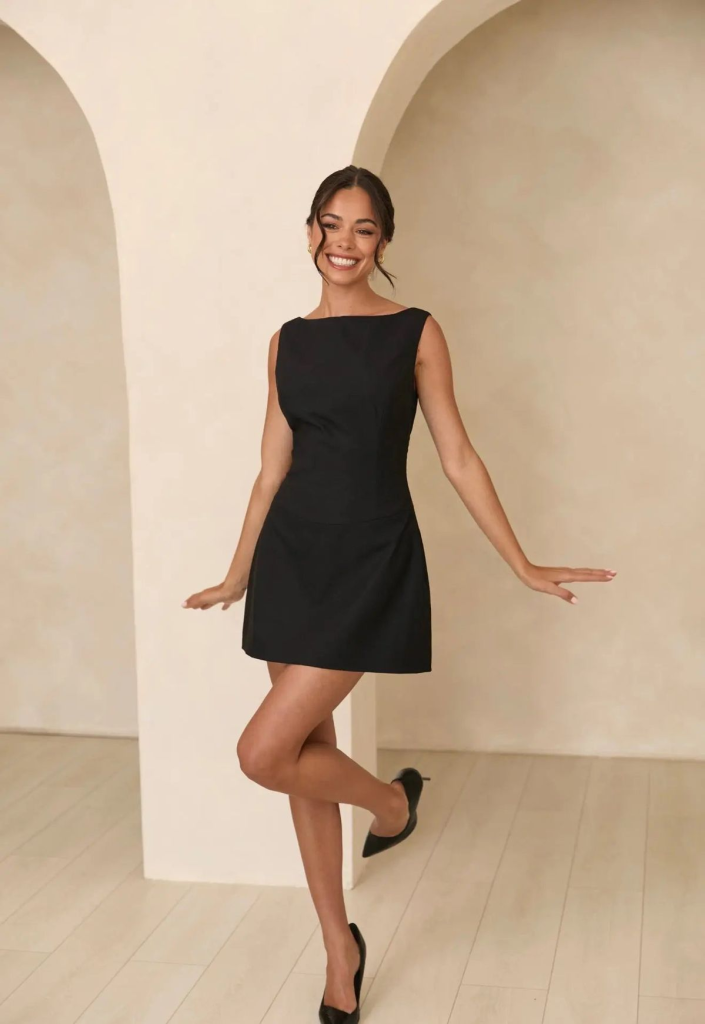
Quick context: “Petite” refers to height—typically 5’4” and under—not body shape or weight. Most U.S. retailers cut petite garments with shorter inseams, proportionally adjusted rises, narrower shoulders, and shorter sleeve lengths to match a smaller vertical frame. That distinction matters because it’s about proportion, not size. See more on petite sizing definitions via major retailers and fit guides below.
- What is petite sizing? See guides from Nordstrom and Macy’s.
- Average height context: U.S. adult women average about 5’4” (varies by source and methodology); see CDC body measurements fast stats.
How I Chose These Dresses
Methodology matters. I started with pieces I personally wore to formal events and that required zero hemming. Then I added silhouettes vetted by other petites on my team and combed through verified customer reviews to confirm where the hem, waist, and slits actually land on 5’4” and under. Finally, I prioritized dresses that exist in petite sizing and standard sizing that still hits at ankle/tea length on shorter frames (so you can wear 2-3” heels and dance without tripping). If a detail was tricky—like backless designs or fabric with no stretch—I called it out and offered workable fixes.
What Flatters Petites at Formal Events (Backed by Optics, Not Just Opinion)
Why do columns, V-necks, and clean vertical seams make you look taller? Visual perception plays a role. The vertical–horizontal illusion shows verticals are perceived as longer than horizontals of the same length, which we can borrow in fashion to elongate the frame (see Encyclopaedia Britannica). In practice, that means long, uninterrupted lines (columns, front seams, vertical pleats), deeper V necklines, and high waists that shift the visual “break” higher up the body.
- Look for: column or bias-cut slips, fit-and-flare with a defined waist, empire or raised waistlines, ankle-skimming lengths, side slits, V or sweetheart necklines, and monochrome looks.
- Be mindful of: drop waists (can shorten the leg line), oversized ruffles everywhere (volume can overwhelm), hemlines that hit mid-calf at the widest point (can truncate), and busy prints if you want a formal vibe.
- Heels help, but comfort first: If you’re in heels, consider block or platform styles endorsed by podiatrists for better weight distribution (APMA high heel tips).
The 10 Best Formal Dresses for Petites
Note: I included comparable examples you can search for. Fit can vary by fabric and brand—if in doubt, check the garment length in the size chart and measure your “hollow-to-hem” at home (guide below).
1) Sweetheart Fit-and-Flare with 3D Floral Appliqués
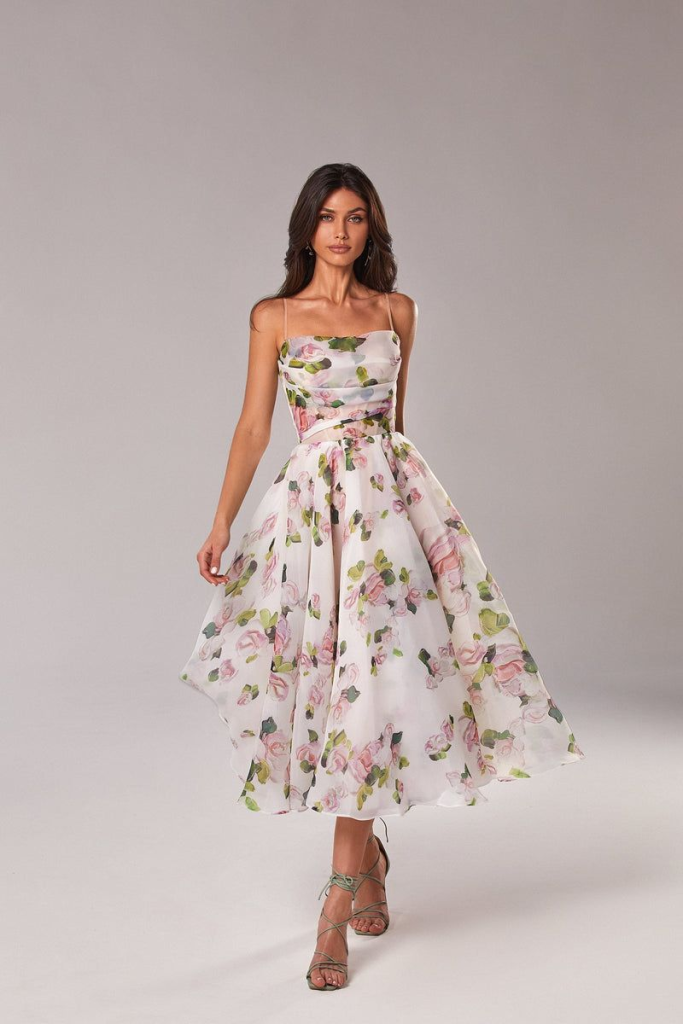
Why it works: A structured bodice that ends a touch higher on the torso visually lengthens the skirt and legs. A-line movement = elegant without overwhelming a smaller frame. 3D floral texture reads expensive and evening-ready, especially in deep jewel tones.
- Best for: black-tie optional, garden weddings.
- Fit notes: If the fabric has no stretch, consider sizing up for the bust; add a bandeau or low-profile coverage if the neckline feels too daring.
- Styling tip: Keep jewelry minimal and let the texture do the talking.
2) Bias-Cut Silk Slip with Crisscross/Open Back
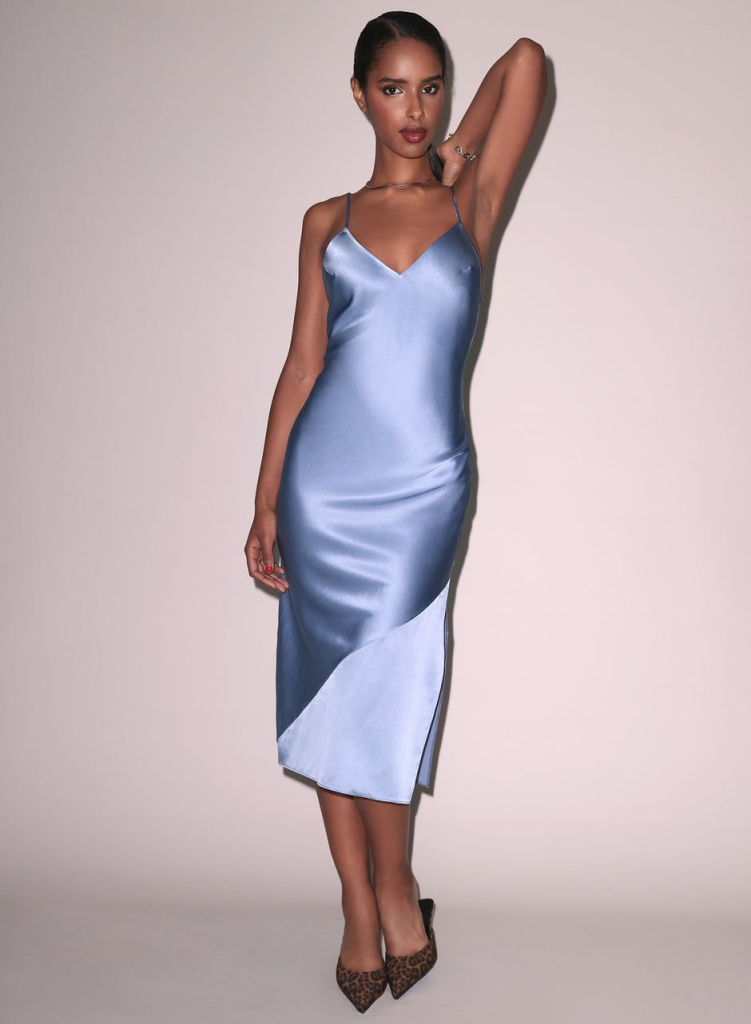
Why it works: Bias cuts skim, not squeeze, so you get a long column that moves beautifully. On petites, ankle-grazing length looks formal without swallowing you whole. Open backs keep it modern—just plan your bra solution (adhesive petals or low-back converters).
- Best for: black-tie optional, beach/formal destination weddings.
- Fit notes: If between sizes, size to your hip measurement for bias cuts.
- Helpful resources: Backless bra solutions the pros recommend via The Strategist.
3) Draped White Midi (Petite Bride or Summer Soirée)
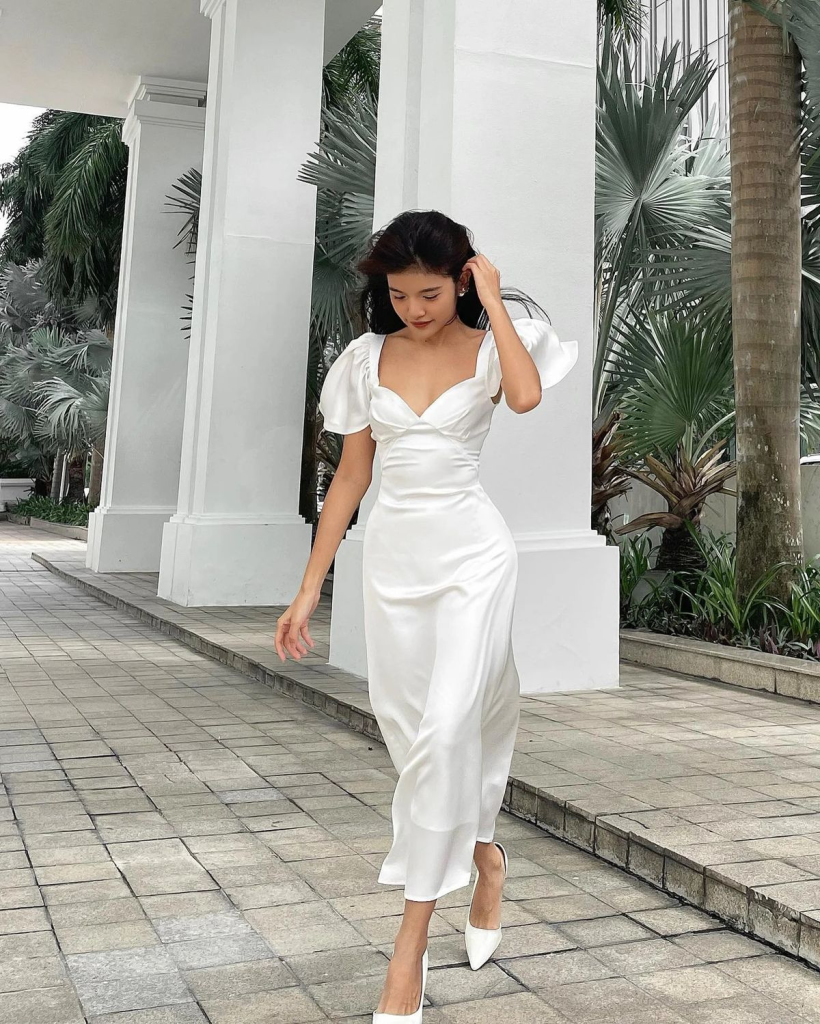
Why it works: On taller folks this reads midi; on petites it often hits ankle or lower-calf (without dragging). Shoulder-to-back drape adds vertical interest and photographs gorgeously.
- Best for: rehearsal dinners, engagement parties, white-themed events.
- Fit notes: Double-check dress code (avoid white as a guest unless the invite says otherwise); see wedding attire rules via The Knot and Brides.
4) Tiered Tulle Midi with Subtle Sparkle
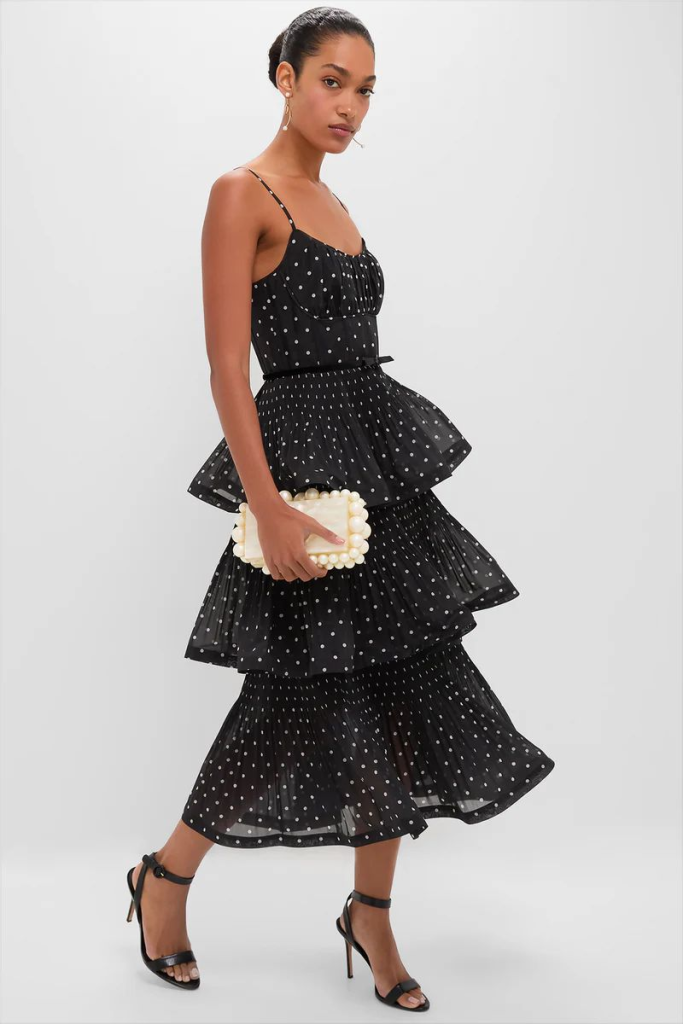
Why it works: Soft tiers that float away from the body create length, not bulk, if the torso is defined. A V neckline in front and back lengthens the neck and keeps proportions balanced on a smaller frame.
- Best for: cocktail-to-formal, holiday galas.
- Fit notes: A touch of stretch in the lining keeps everything in place—no constant readjusting while you dance.
5) Halter Satin Slip (Adjustable Tie Neck)
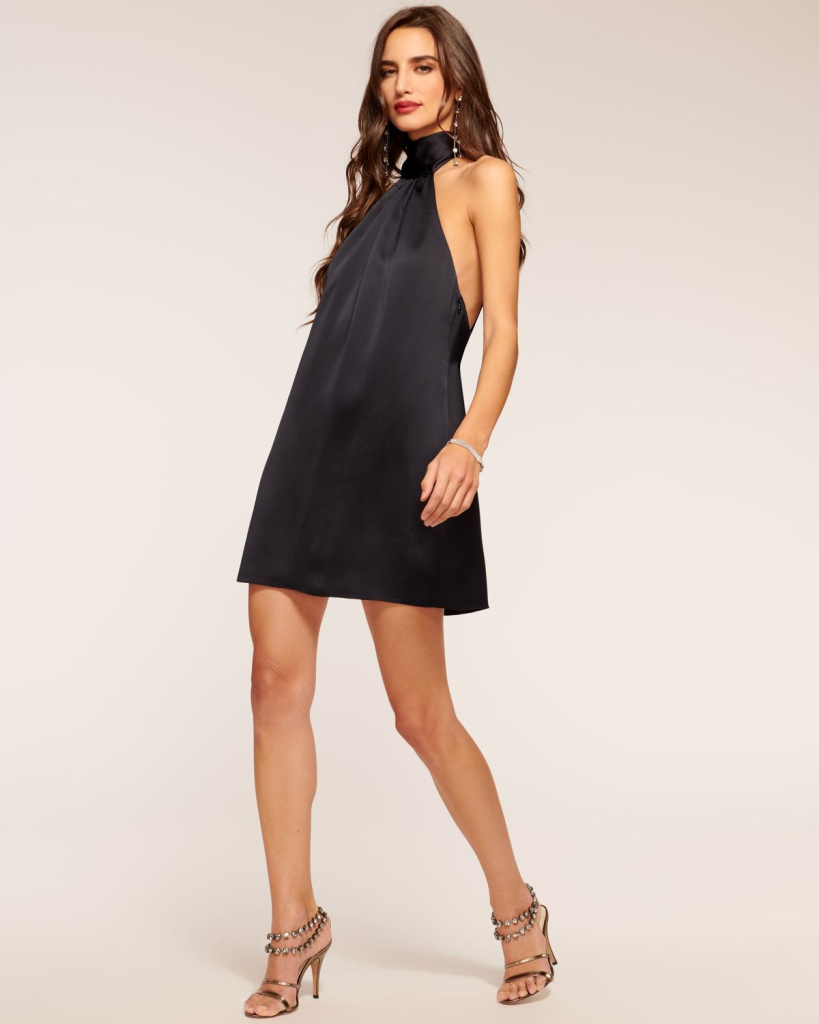
Why it works: The 90s-esque column elongates the silhouette; a tie-neck lets you micro-adjust the bodice height to match a shorter torso. High-shine satin reads formal with nothing more than a sleek sandal.
- Best for: evening weddings, city venues.
- Fit notes: Smaller busts get a custom-feel lift via tie adjustments; larger busts may prefer stick-on petals for a clean line.
6) Streamlined Gown with Flamenco Ruffle Hem (Available in Petite)
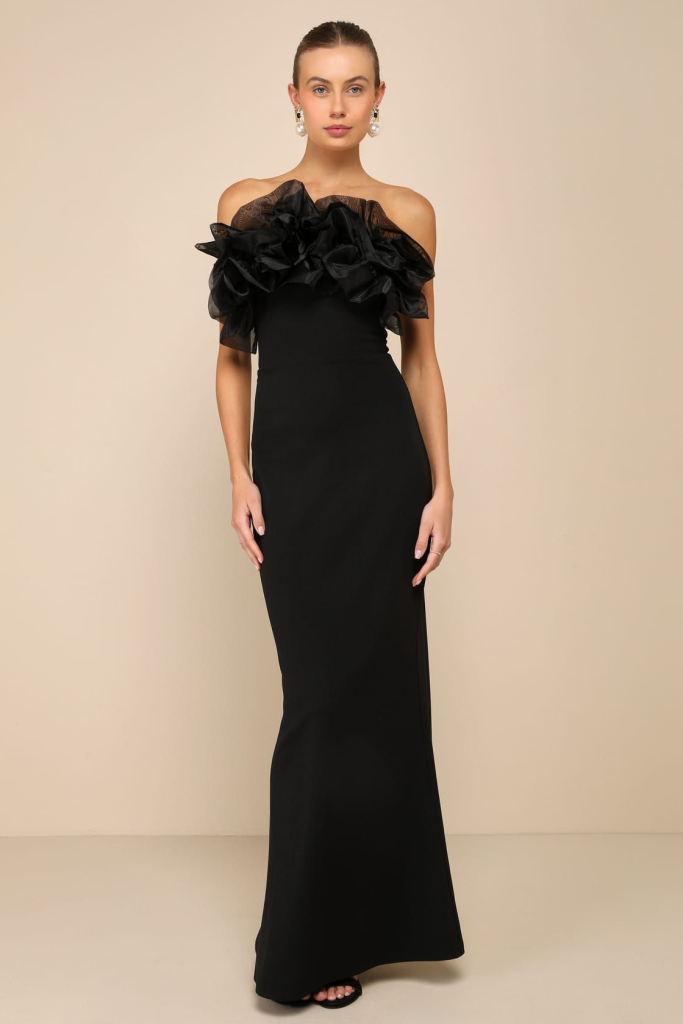
Why it works: Sleek through the torso and hip, drama at the hem. When a gown comes in true petite sizing, the knee break and ruffle start where they should—no awkward flare around the shins.
- Best for: black tie, charity balls.
- Fit notes: With petite lengths, 2 to 3-inch heels usually keep the hem just off the floor (aka danceable).
7) Off-the-Shoulder Ruched Midi (Stretch + Built-In Structure)
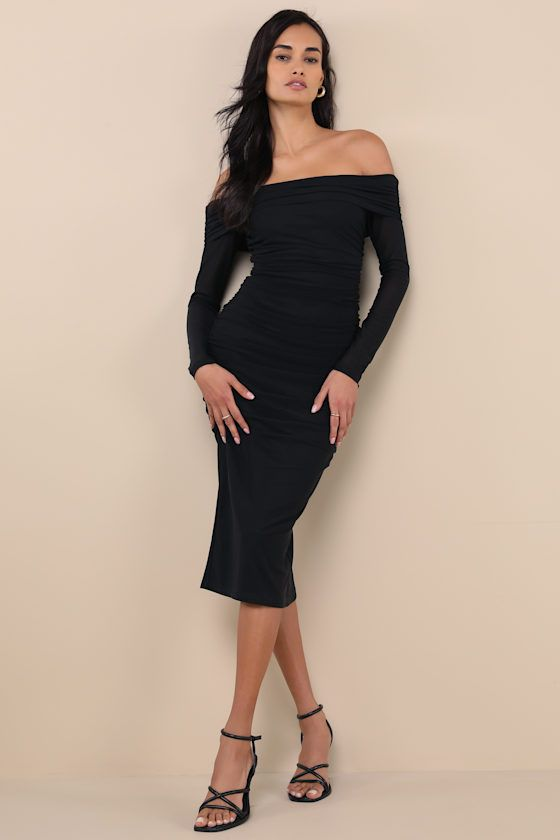
Why it works: All-over ruching smooths and defines without heavy tailoring, while an angled hem and shoulder-baring neckline draw the eye up-and-down (elongating effect). Many versions include hidden shaping layers that keep everything secure.
- Best for: black tie optional, cocktail attire that leans formal.
- Fit notes: Stretch fabric = forgiving fit across bust, waist, and hips. If you’re between sizes, you can often size down.
8) Satin Kimono-Sleeve Column (Petite-Proportioned)
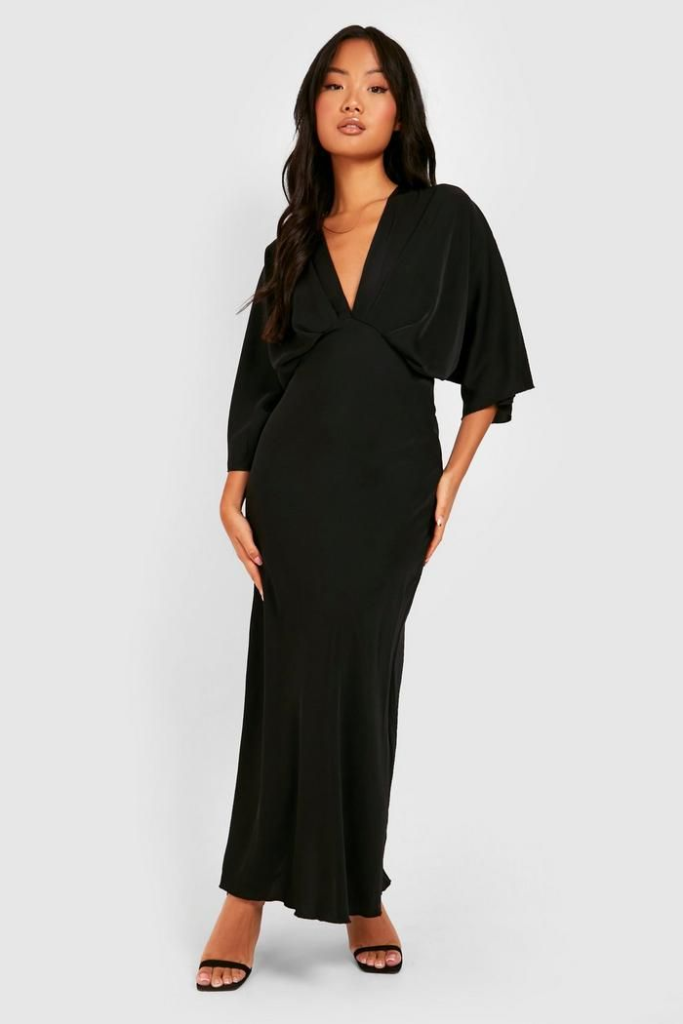
Why it works: Old Hollywood energy with a raised waist and V-neck that lengthen the torso. Petite-specific cuts fix the usual problems—too-deep V, sleeves past the elbow, slits that land too high.
- Best for: modern black tie, museum or theater venues.
- Fit notes: Check the slit measurement against your knee height; petite patterning typically hits just right.
9) Tea-Length A-Line with Tailored Bodice (Vintage-Inspired)
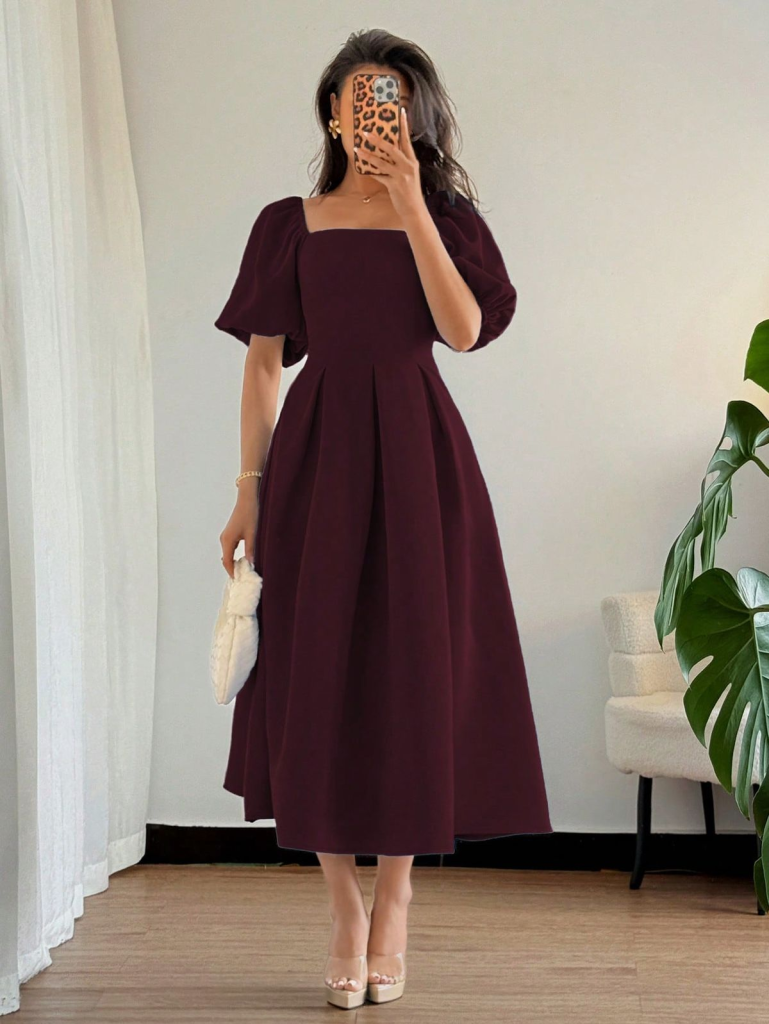
Why it works: A tailored bodice plus structured A-line skirt gives definition without bulk. Tea length is particularly elegant on petites when the hem lands just above the ankle bone—think mid-1950s screen siren, but updated.
- Best for: semi-formal to black-tie optional, retro-themed events.
- Fit notes: Not all “tea-length” is equal—check the stated skirt length and compare to your hollow-to-hem measurement.
10) One-Shoulder Metallic Column with Tulip Hem
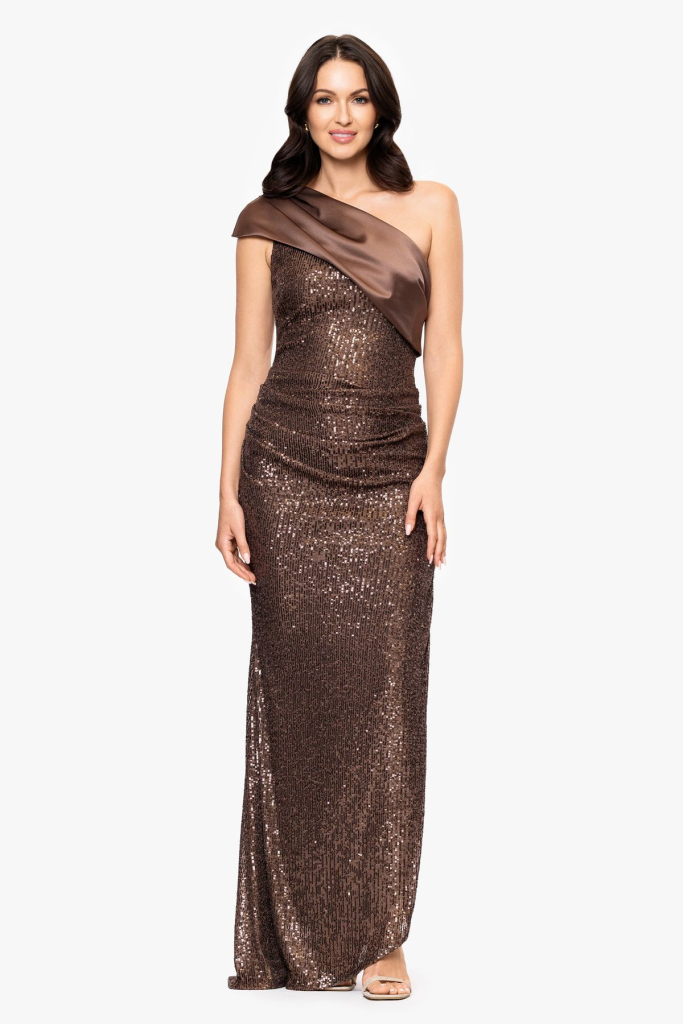
Why it works: Asymmetry pulls the eye diagonally (great for adding height), while a tulip hem shows a bit of leg for length without a risky up-to-there slit. Substantial knits or lined metallics tend to smooth instead of cling.
- Best for: black tie, New Year’s Eve, red-carpet energy.
- Fit notes: If the fabric is thick and structured, alterations are less likely; if it’s slinky, consider seamless underpinnings. Wirecutter’s guide to the best shapewear is genuinely helpful.
FAQ: Petite Formalwear, Hem Lengths, and Dress Codes
What silhouettes are most lengthening on petites?
Columns, bias-cut slips, and fit-and-flare shapes with a defined or slightly higher waist. V and sweetheart necklines elongate the neck and torso. Monochrome palettes or tonal dressing create a clean vertical line (that visual trick again). This isn’t about rules—just reliable starting points.
Should petites avoid midi dresses?
Not necessarily. The key is where the hem lands. If a midi chops at the widest part of your calf, it can look shorter. But a “midi” that hits just above the ankle on a petite (aka an ankle-skimming tea length) can be incredibly elegant. Heels or dressy flats with a low vamp help preserve the leg line. Many stylists co-sign this nuanced approach—see dress-length guidance across fashion editors at outlets like Vogue and Harper’s Bazaar.
Can a short dress be formal?
Yes—with smart styling. Start with a solid or tonal fabric in a luxe finish (satin, crepe, velvet). Add statement earrings or a sculptural cuff, an evening clutch, and elevated shoes (embellished flats work if you dont do heels). For inspiration on dress codes by formality level, check The Knot or Brides.
What about alterations—worth it?
Hems are the most common and cost-effective alteration for formalwear. Many tailors can also shorten straps, raise waist seams, or close a slit. A basic hem on an unlined satin slip is usually straightforward; chiffon or multi-layer tulle takes more time. See this practical breakdown from Real Simple. If you’re petite, you’ll often save time by starting with petite sizing so the waist, shoulder, and slit placements are already proportioned to your frame.
How to Nail Your Length: A Two-Minute Measuring Guide
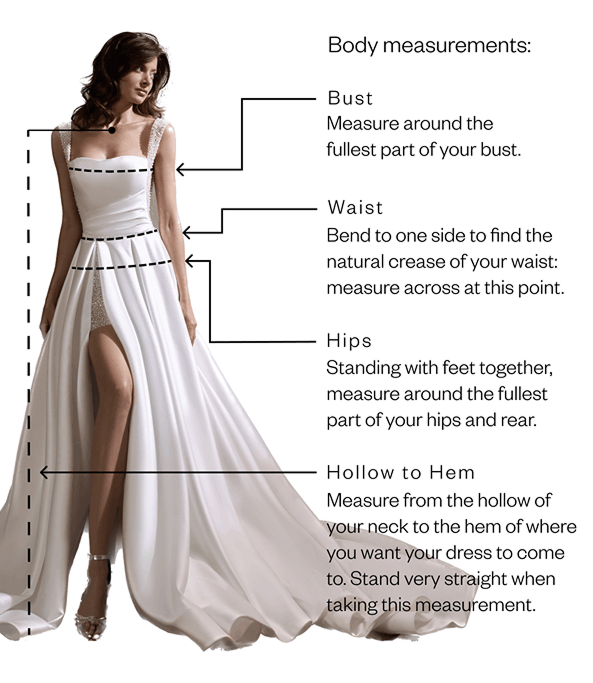
- Measure “hollow to hem”: Stand straight, barefoot. Measure from the hollow at the base of your throat to your desired hem (ankle bone for most formals if you want ankle-grazing).
- Compare to size chart garment length: Many retailers list shoulder-to-hem or center-back length. If it’s longer than your target, calculate how much a heel would lift the hem off the floor (each inch of heel lifts roughly an inch of hem).
- Account for fabrication: Bias cuts “drop” slightly; tulle sits lighter and higher; heavy crepe might hang longer.
Shoes and Underpinnings That Make a Difference
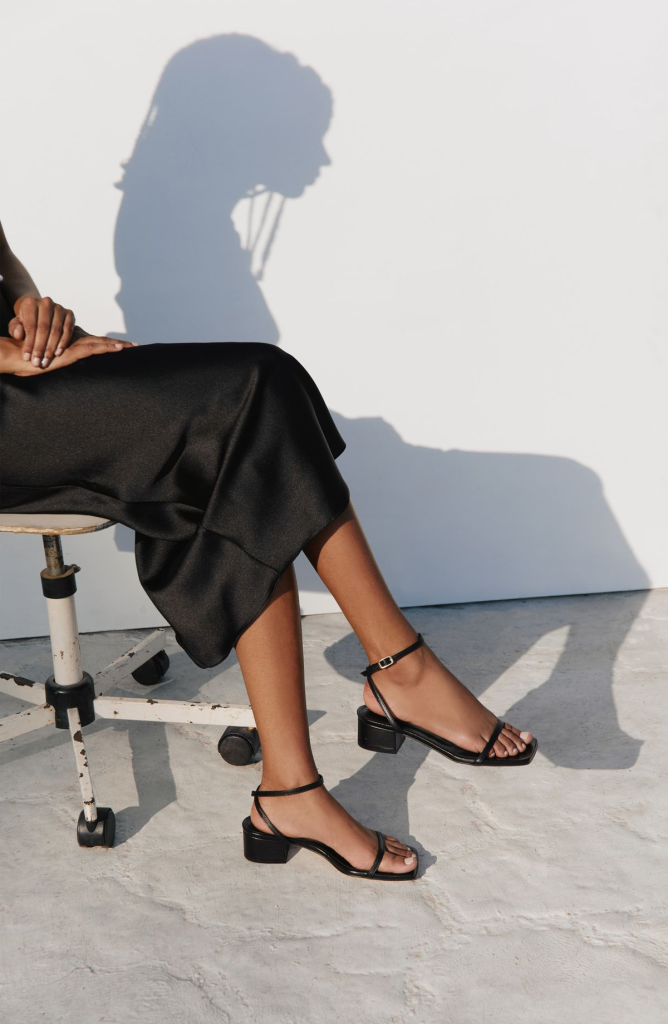
- Low vamp shoes lengthen the leg line. Pointed or almond toes read dressier and elongate more than rounded.
- Block heels or platforms reduce foot strain over hours of standing (see APMA guidance).
- For backless/strappy dresses, try adhesive covers or low-back converters. Well-reviewed options via The Strategist.
- For smoothing without squeeze, see Wirecutter’s shapewear picks. Choose seamless, nude-for-you colors.
Dress Code Cliff Notes
- Black tie: Floor-length gowns are safest; ankle-skimming columns or tea-length can be acceptable depending on the venue and region—check invite and couple’s website. Reference: Brides.
- Black tie optional: Formal gowns, elegant midis, or luxe cocktail dresses.
- Cocktail: Knee to midi, or a polished mini with formal accessories. See The Knot’s attire guide.
My Petite-Editor Shortlist (At-a-Glance)
- Need zero hemming most often: ankle-grazing slips; petite-sized mermaid gowns; tea-length A-lines labeled 45–50” from shoulder.
- Most forgiving fabrics: medium-weight crepe, matte satin, stretch-lined knits, structured metallics.
- Fast fixes: fashion tape for necklines, stick-on petals for backless cuts, and hem tape in your clutch (definitly learned that one the hard way).
One last thought. Rules are tools—not walls. If you love a dress that “shouldn’t” work for petites but you put it on and feel incredible? That’s the one. Personal style > theory every time. But if you want the math of looking taller to quietly back you up, the options above do the job without trying too hard. You’ll look polished, you’ll move comfortably, and you won’t spend the reception stepping on your hem. Been there, dont miss it.
Trusted Sources and Further Reading
- Petite sizing basics: Nordstrom Petite Guide, Macy’s Petite Clothing Guide
- Body measurements context: CDC: Body Measurements
- Optics and perceived height: Vertical–Horizontal Illusion (Britannica)
- Wedding dress codes: The Knot, Brides
- Alterations overview: Real Simple: Clothing Alterations Guide
- Heels and foot health: APMA: High Heels Safety Tips
- Underpinnings & shapewear: The Strategist: Best Backless Bras, Wirecutter: Best Shapewear


