




If Clueless were released in 2025, I’m willing to bet Cher Horowitz wouldn’t reach for a perfectly matched yellow set. She’d go full-on mix-and-match: checks of different scales, tartans in clashing colorways, and a little texture play for good measure. That’s not nostalgia talking, it’s where the trend cycle has landed—90s prep colliding with modern maximalism, and yes, plaid-on-plaid is back (and better).

Why plaid-on-plaid now? A quick pulse check
Trends don’t emerge in a vacuum. This one is the natural outcome of three currents: a 90s revival (hello, grunge and prep), a swing away from ultra-minimal “quiet luxury,” and the rise of dopamine dressing (pattern, color, fun). Street-style photographers captured clashing checks across New York, London, Milan and Paris this past fashion month—think anchored silhouettes with deliberately mismatched patterns. For visual receipts, scroll the latest city galleries from trusted outlets: New York, Milan and Paris street style on Vogue, plus global roundups by Harper’s Bazaar and ELLE.
Data-wise, interest in plaid is sticky, not spiky. Searches for “plaid skirt” and “tartan blazer” show recurring fall/winter peaks in the U.S. (you can check the live curve here: Google Trends). The broader appetite for expressive fashion is also documented in industry outlooks like McKinsey’s State of Fashion and consumer demand snapshots such as Lyst’s Year in Fashion.
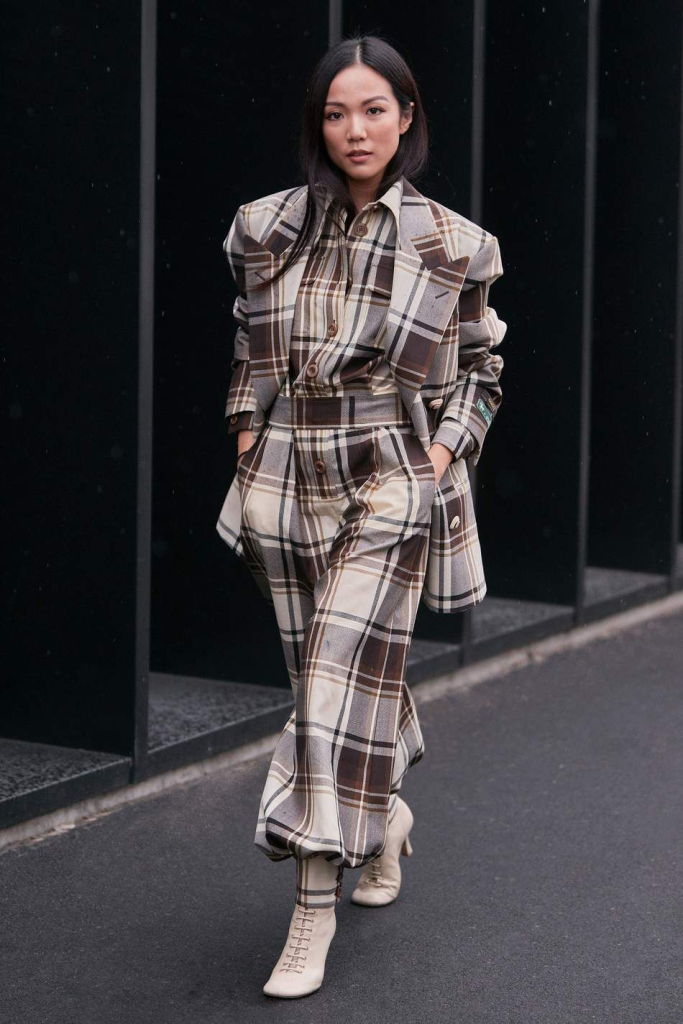
Plaid vs. tartan vs. flannel: the fast (but accurate) fabric primer
First, terms. In the U.S., “plaid” is the umbrella term for check patterns. “Tartan” refers to the Scottish-origin crisscross patterns tied to clans; all tartans are plaids, but not all plaids are tartans. “Flannel” is not a pattern—it’s a fabric finish (a brushed surface), often made from cotton or wool. If you like going down fashion-history rabbit holes, start with Britannica on tartan and flannel, the V&A’s dedicated Tartan exhibition, and the Met’s “Punk: Chaos to Couture” (tartan as rebellion) exhibition archive.
How to nail mismatched plaid (without looking like the laundry exploded)
Good clashes are intentional. Here’s the simple framework I use on shoots and IRL—and, honetsly, it works on alot of body types and budgets:
- Contrast the scale: Pair a micro-check shirt with a bold-windowpane blazer. Big + small = harmony.
- Share a color family: Ensure at least one color overlaps (e.g., navy in both top and bottom). Monochrome clashes (all greyscale) are the easiest entry point.
- Balance texture: A brushed flannel softens a crisp worsted-wool plaid. Tweed with cotton flannel? Chef’s kiss.
- Anchor the silhouette: Keep one element tailored (say, a fitted blazer or pleated trouser) so the pattern play reads polished, not chaotic.
- Use a buffer: Solid belts, boots, or a neutral knit can “reset” the eye between plaids.
- Limit the colors, not the checks: Two or three patterns max, in 2–3 main colors, is usually the sweet spot.

Editor-tested outfit formulas
These are plug-and-play combos you can recreate with pieces you already own (or can find secondhand):
- The belted-blazer set: Double-breasted plaid blazer (with a removable belt) + tartan mini skirt + opaque tights + loafers. Wear the blazer belted for structure or open to let the skirt’s pattern do the talking.
- Soft flannel x sharp trouser: Brushed-cotton flannel shirt tucked into pleated wool plaid pants. Add ankle boots and a leather belt as a visual pause between patterns.
- Vest as polish: A plaid vest over a contrasting check button-down, finished with dark indigo jeans or a tone-on-tone plaid skirt. Great for offices that allow creative smart-casual.
- The barn-jacket clincher: A cotton or waxed-cotton barn jacket (bonus points for a plaid lining or collar) over any check-on-check base. Americana meets city-ready.

Fabric and fit: what actually matters
- Wool and wool blends: Naturally warm, breathable, and resilient. Look for fully lined trousers for winter comfort. Care tips via Woolmark: how to wash wool.
- Cotton flannel: Soft, everyday-friendly, and easy to layer. Weight (measured in oz/yd² or gsm) tells you how warm it’ll feel.
- Polyester/viscose/elastane suiting: Durable with stretch; viscose adds drape. Great for blazers and vests that need to hold structure.
- Tailoring notes: High-waist skirts elongate the leg line; ankle-length pleated pants spotlight boots/loafers; adjustable belts on blazers create shape over bulky layers.

Smart shopping (new and pre-loved)
Tartan and checks are perennial, which makes them ideal to buy once, wear for years, or source vintage. A few credible paths:
- Heritage makers: For enduring fabrics and construction, explore brands with textile pedigrees (e.g., Pendleton, Barbour, L.L.Bean). Read their fabric guides and care pages before you buy.
- Thrift and resale: Plaid blazers, flannels, and skirts are secondhand staples. Resale is booming for a reason—see the latest data in the ThredUp Resale Report.
- Fit checklist in-store: Sit-test a skirt (no ride-up), check sleeve pitch on blazers, confirm waistband stability on pleated trousers, and do a wrinkle test on viscose blends.

Common mistakes (and easy fixes)
- Too many colors at once: Cap your palette to two or three main hues. Fix: introduce a neutral knit or coat to calm the look.
- No pattern scale strategy: Two medium checks can clash in a muddy way. Fix: go micro + macro.
- Ignoring fabric weight: A heavy tweed over a paper-thin skirt can feel top-heavy. Fix: balance weights (midweight over midweight, or anchor with sturdy boots).
- Forgetting proportion: Oversized on oversized can overwhelm. Fix: define the waist (a belt, a cropped vest, or a tailored blazer).
Culture note: why this reads modern (not costume)
Plaid carries cultural weight—from Scottish heritage to punk subversion to 90s teen cinema. Context modernizes it. For instance, a precise, minimalist shoe or a sleek leather bag reframes busy checks as intentional. If you want the references, revisit Clueless (1995) on Wikipedia, and how tartan moved from tradition to rebellion in museum archives like the Met’s Punk exhibition. That lineage is why today’s mismatched plaid feels edgy, not “costumey.”

Build-your-own six-piece plaid capsule
If your closet’s light on checks, start here. Mix across these six and you’ll have 10+ outfits without trying too hard:
- Fitted, belted blazer in a mid-scale check (poly/viscose with a touch of elastane).
- Mini skirt in a bold tartan (poly/wool blend for structure and warmth).
- Classic flannel button-down (100% brushed cotton; aim for a midweight you can wear year-round).
- Pleated wool trousers (fully lined; ankle length to showcase footwear).
- Plaid vest (great over shirting; high round neck and button front for easy tailoring).
- Cotton or waxed-cotton barn jacket (functional pockets, corduroy collar; looks pricier than it costs when the fit is right).

Care and longevity (because sustainability starts at home)
- Brush and air wool between wears; spot clean when possible. Woolmark’s care guides are gold: how to wash wool.
- Wash cotton flannel inside-out on cold; tumble low or line-dry to reduce pilling.
- Press, don’t over-steam: excessive steam can soften interfacing in tailored blazers.
- Repair small snags early—tartan weaves can ladder if ignored. A good tailor is worth it, definitly.
Quick FAQ
Is mismatched plaid office-appropriate? In most business-casual settings, yes—anchor with a dark blazer or vest and keep accessories minimal. If your workplace is conservative, try a micro-check shirt under a solid suit and add a plaid scarf for a low-risk start.
What if I hate color? Stick to greyscale or navy-based checks. You’ll get the pattern play without the brightness.
Does body type matter? Not for the trend, but proportion always does: define the waist if you’re wearing volume up top, and try ankle-showing hems to lengthen the leg line.
Further reading and credible sources
- Street style archives: Vogue, Harper’s Bazaar, ELLE
- History and fabric: Britannica on tartan and flannel; V&A’s Tartan exhibition
- Industry pulse: McKinsey’s State of Fashion; Lyst’s Year in Fashion
- Search interest: Live charts via Google Trends
- Museum context: The Met’s “Punk: Chaos to Couture” archive
- Cultural reference: Clueless (1995)
Bottom line: if you can count to two (colors and scales), you can wear mismatched plaid. Start small, build confidence, and then go bolder—because fashion is meant to be fun, and checks never really left.


