



Spring in London is a paradox: cherry blossoms and sun one minute, side‑ways rain and gusts the next. That’s why outerwear here isn’t just a fashion play—it’s survival gear with style. After moving to the city and paying attention on the Tube, in Hackney coffee queues, and around Hyde Park during Saturday runs, I kept seeing the same five jackets again and again.
Below I’ll break down what’s trending now, what’s truly timeless, and how to choose the version that won’t let you down when the forecast changes mid‑commute (which it will, honestly).

First, a quick weather reality check
Spring in London is mild but mercurial, with frequent showers, breezy afternoons and quick temperature swings. Official records show a mix of cool mornings and milder afternoons, plus regular rainy days through March–May—exactly why locals lean on light-yet-technical outerwear.
The 5 Jackets Londoners Actually Wear in Spring
1) The Trench Coat (Heritage, Water-Resistant, No-Brainer)

Are trench coats overhyped in England? Not remotely. The trench is both a cultural artifact and a practical shield against drizzle and wind. The fabric story matters: gabardine (a tightly woven, water-resistant twill) was pioneered in late‑19th‑century Britain and remains the gold standard for a smart, rain-capable shell. The style’s origin is shared across historic makers—see heritage notes from both Burberry (development of gabardine, military adaptations) and Aquascutum (early waterproofing and officer’s coats)—which tells you how deeply the trench is woven into local dress.
- What to look for: weather-resistant cotton or cotton-blend gabardine; removable liner; storm flaps; a real belt (for cinching on windy bridges).
- Why it works here: it handles passing showers without overheating and plays nicely with tailoring or jeans.
- Care & longevity: brush off grit and hang dry after showers. If there’s a detachable liner, air it out. For rainwear principles—DWR finishes, breathability—see REI: How rainwear works.
Styling note: if you’re new to London, you’ll notice people keep theirs neutral—stone, beige, navy—so the coat works 6–8 months of the year. Sounds boring, but it’s definintely smart.
2) The Waxed “Barn” or Field Jacket (Rugged, Repairable, Very British)

You’ll see these in parks, markets, and on weekend train rides—because a waxed cotton shell laughs at light rain, resists thorns, and softens beautifully with age. The real edge is serviceability: a quality waxed jacket can be re-waxed and repaired for decades. That’s not marketing fluff; it’s a service model, as shown by Barbour’s repair & re‑wax program and similar heritage from Belstaff. Keeping garments in use longer dramatically lowers impact—WRAP estimates extending life by just nine months can cut carbon, water and waste by 20–30 percent (WRAP: Valuing Our Clothes).
- What to look for: midweight waxed cotton; snap storm placket; corduroy collar; roomy pockets for umbrella/phone.
- Why it works here: fast-drying exterior after showers; not too hot on the Tube; more casual than a trench but still tidy.
- Care: re-wax every 1–2 seasons depending on wear; avoid machine washing. Official guidance: Barbour: Wax care.
My two cents: if you’re unsure on color, go for dark olive. It hides London’s splash marks and looks good with literally everything.
3) Oversized Leather Jacket or Bomber (Cool, Seasonless, Surprisingly Versatile)

Head east—Shoreditch, Dalston, Hackney—and you’ll see oversized bombers and boxy leathers over trousers or long skirts. It’s not just fashion; leather blocks wind, layers well, and lasts if you care for it. The bomber silhouette itself traces to military flight jackets like the MA‑1; if you’re a history nerd (me), the National Museum of the U.S. Air Force has a succinct primer: Flight Jackets: MA‑1 and beyond.
- What to look for: midweight cowhide or chrome‑free tanned leather; roomy drop-shoulder fit for knits underneath; quality zips.
- Why it works here: windproof, not bulky; dresses up or down—tailored trousers, denim, even a floaty maxi.
- Care & sourcing: condition leather 1–2x per year, keep dry; consider tanneries audited by the Leather Working Group for better environmental standards.
Pro tip: if you run warm, go unlined or lightly lined. If you run cold (I do), a quilted liner underneath turns it into a stealthy three‑season jacket.
4) Quilted, Collarless Liner Jacket (Featherlight Layering MVP)
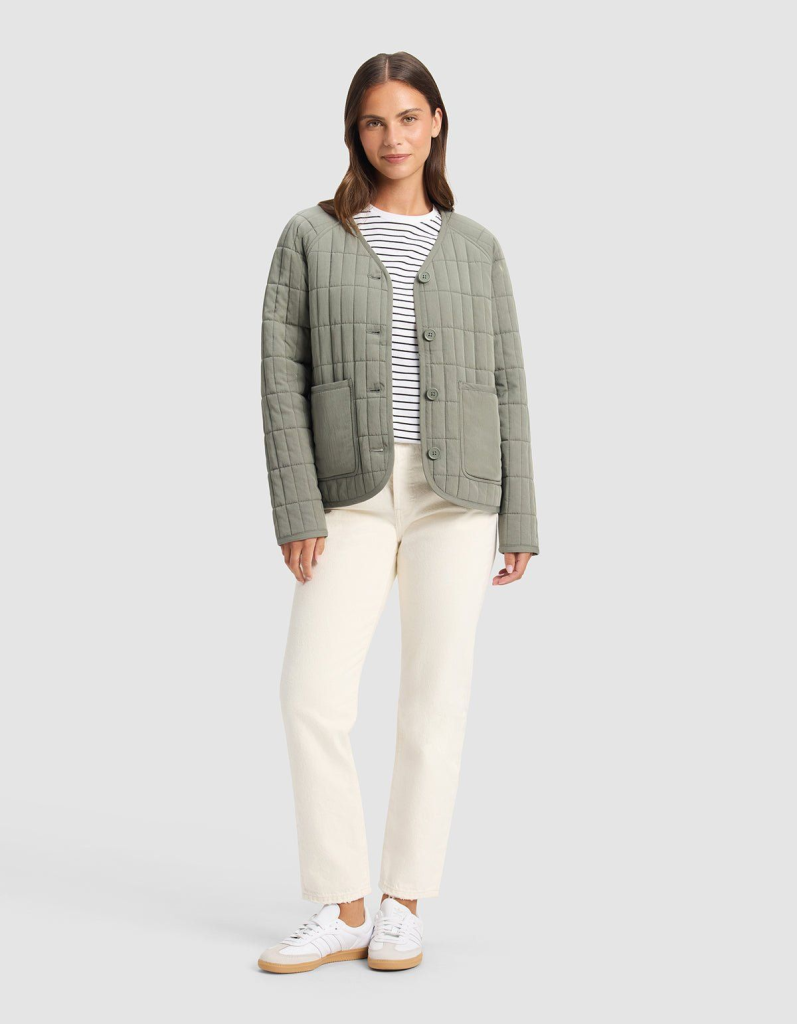
These look simple—almost handmade thanks to visible quilting—but they’re incredibly practical. The design owes a debt to military liner systems (think the M‑65 field jacket’s removable insulated liner). For a bit of background, see the M‑65’s place in American dress history via the Smithsonian: M‑65 field jacket.
- What to look for: lightweight synthetic or cotton batting; box or onion quilting; collarless to avoid bulk under other coats.
- Why it works here: adds warmth without weight; layers under a trench on wet days and stands alone on dry afternoons.
- Care: most are easy cold‑wash, hang‑dry. If the outer fabric is treated, avoid harsh detergents (see base-layer and care guidance: REI: Base layers & fabric performance).
Style note: olive, black, and navy look refined; cream feels fresh with denim and trainers. You’re probbaly going to wear it more than you expect.
5) Performance Running/Training Jacket (Sporty, Packable, Genuinely Useful)
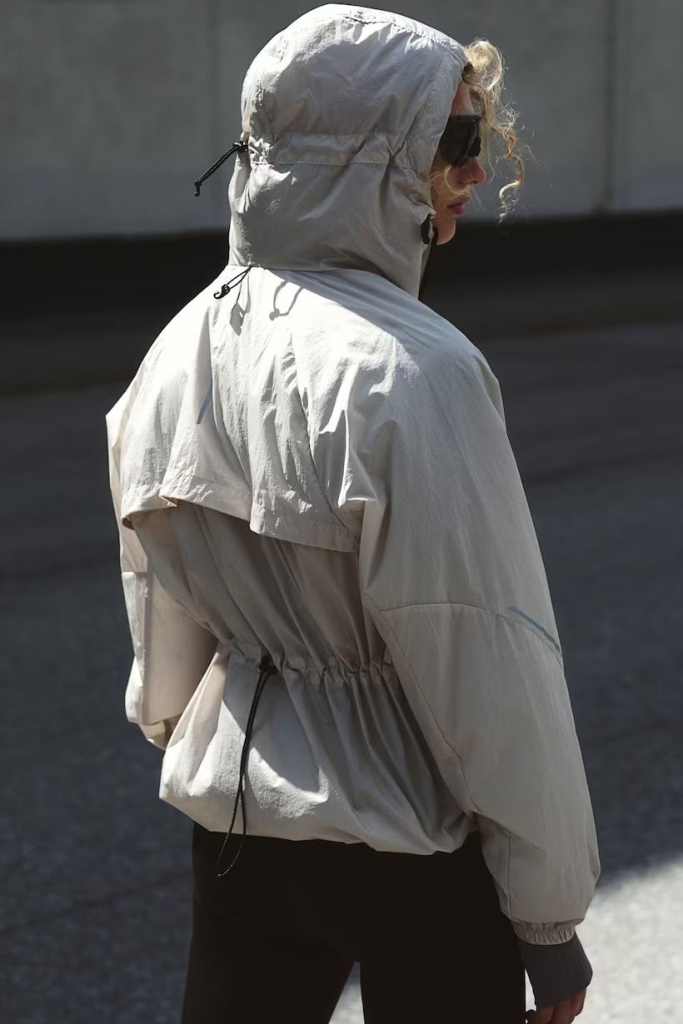
Athleisure dominates city life, and spring is marathon season—London’s major race typically runs in April (TCS London Marathon)—so you’ll spot featherweight, sweat‑wicking shells from the commute to weekend long runs. It’s also part of a bigger macro trend: sportswear continues to outgrow other categories globally, according to McKinsey’s State of Fashion.
- What to look for: ripstop nylon or polyester with a durable water‑repellent (DWR) finish; vents; packable hood; reflective trims.
- Why it works here: dries fast after showers; scrunches into a tote; ideal for run‑commuting or errand loops.
- Fabric cues: look for breathable laminates and taped seams if you run in proper rain; primer on waterproof/breathable tech here: REI: Rainwear explained.
How to Choose the Right Jacket for London’s Spring
- Map to your routine: commuting by Tube + office smart-casual? Trench. Parks/markets/weekend trips? Waxed field jacket. Nights out/East End galleries? Oversized leather bomber. Errands + run‑commutes? Performance shell. Constant layering? Quilted liner.
- Mind the water: London’s showers are frequent but often light—water‑resistant fabrics are usually enough. If you want true waterproofing, look for seam‑taping and hydrostatic head ratings; see this overview.
- Think longevity: choose pieces you can service. Re-waxable cotton and repairable leather can last decades (Barbour services, LWG standards, and WRAP’s research on impact reduction).
- Pick neutral colors: black, navy, olive, stone. They’ll work across seasons and with London’s muted palette, which is real and practical.
- Size for layers: you’ll want room for a knit or liner on cold mornings without feeling bulky by lunch.
Outfit Pairings That Always Work
Trench + wide-leg trousers + leather trainers for office days; waxed field jacket + straight denim + Chelsea boots for markets; leather bomber + pleated trousers or a floaty maxi dress for evenings; quilted liner + hoodie + cargoes on errands; performance shell + leggings and a cap for run‑commutes. For footwear context, the city’s love affair with classic sport styles (think Adidas Sambas/Nikes) is well documented—see coverage of Adidas’ resurgence in mainstream press like The Guardian.

Care, Repairs and Getting More Life from Your Jacket
- After rain: hang dry at room temp; avoid radiators (they can damage coatings and leather finishes).
- Reproofing: renew DWR on shells every season or two; see brand care pages and general advice via REI.
- Waxed cotton: re-wax when the fabric looks dry; expect patina. Official guidance: Wax care.
- Leather: condition sparingly; store on wide hangers; keep away from prolonged sun, which can fade and dry the hide (LWG for sourcing standards).
- Repairs vs. replacement: extending life is one of the biggest sustainability wins (WRAP research).
Quick Buy-Guide: Which One’s For You?
- If you want one jacket to do it all: trench in a breathable, water‑resistant gabardine.
- If you live in the parks on weekends: waxed field jacket (re-waxable).
- If you want edge and longevity: oversized leather bomber (ideally LWG‑certified).
- If you’re always layering: collarless quilted liner.
- If you train/run or value packability: performance running shell.
London spring is about being prepared without overpacking your closet. Choose materials that match the city’s stop‑start weather, prioritize serviceable construction, and you’ll stay comfortable—and look like you actually live here, not just visiting for a week. Yep, I said it.
Sources and further reading
- Met Office: UK Spring weather
- Met Office: UK climate averages (1991–2020)
- Burberry: History and gabardine heritage
- Aquascutum: Brand history and trench origins
- Barbour: Repair & re-wax service and Wax care
- Belstaff: Heritage
- Leather Working Group (LWG)
- WRAP: Valuing Our Clothes
- National Museum of the U.S. Air Force: Flight Jackets
- TCS London Marathon (official)
- REI: How rainwear works and Base layers & fabric performance
- The Guardian: Adidas sales and Samba demand


