


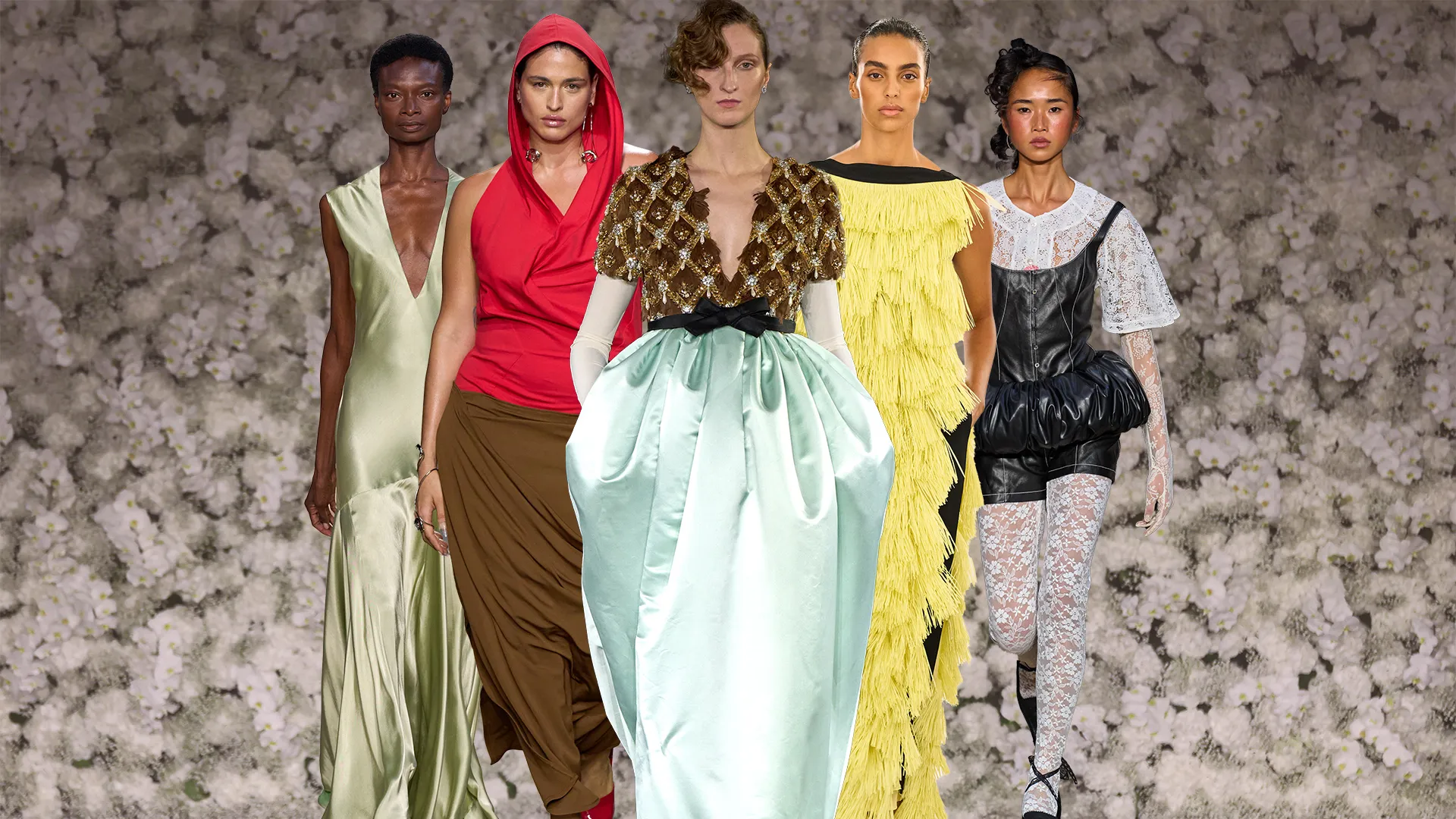
When my sister Jilly and I were kids, we didn’t just play dress-up—we reenacted The Devil Wears Prada (she was the earnest assistant; I was the terrifyingly organized one; our mom played editor-in-chief with frankly suspicious ease). Fast-forward, and Jilly now assists the CEO at The Society Management, which means Fashion Week is literally her work week—fittings, castings, shows, back-to-backs, model calls from Brazil at 6:00 a.m., the whole thing. I tagged along to a few New York Fashion Week shows this season and then sat down with her to separate the truly directional ideas from the Instagram bait. Below is our short list of five runway trends that actually matter now—and how to translate them to real life without needing a stylist, a black car, or a backstage pass.
Note: We cross-referenced our show notes with official schedules from the CFDA Fashion Calendar and runway reporting from Vogue Runway and WWD to make sure we’re not just vibing—we’re verifying.
1) Fringe, but make it Carolyn Bessette-Kennedy
Fringe returned with grown-up restraint: think clean lines, architectural fringed panels, and movement that reads quiet luxury, not costume. At Ralph Lauren, tailored trousers with a whisper of side-fringe clarified how a classic can be subltly reimagined. Nanushka pushed a soft-yellow fringed knit against a leather skirt for tension and tactility. Proenza Schouler dialed up amplitude with a full-length fringed dress that moved like water. The throughline was control—designers trimmed volume, grounded the look with leather, and kept palettes minimal so the motion does the talking.
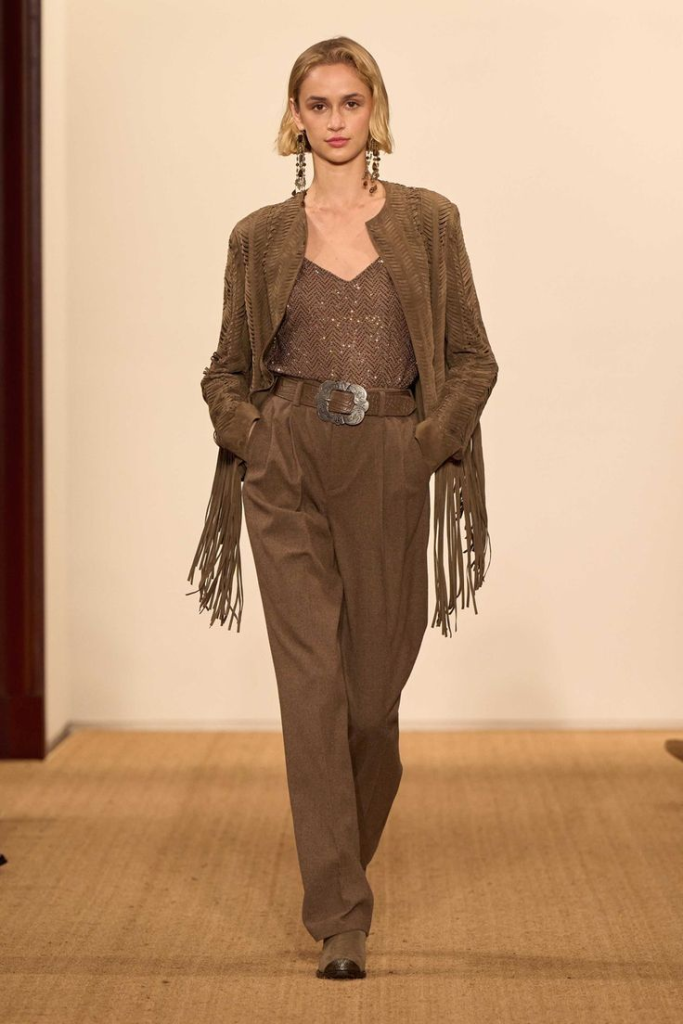
Context that matters: Fringe cycles in and out, but its modern appeal lives in contrast and strict styling. Historically, fringe flashed in the 1920s “Jazz Age” and resurfaces whenever movement and nightlife trend upward—see museum perspectives on the decade’s design language via the Smithsonian’s Cooper Hewitt (“The Jazz Age”) exhibition channel and a concise 1920s overview from FIT’s Fashion History Timeline. If the silhouette nods to Carolyn Bessette-Kennedy—minimalist, precise, neutral—it feels contemporary again. For a primer on her enduring influence, see The New York Times.
How to wear it now (without trying too hard):
- Keep it to one fringed piece per outfit (scarf, skirt hem, or a side-fringed pant). Everything else, stripped back.
- Anchor with leather or denim to avoid festival energy (Jilly’s mantra: “Texture needs ground.”).
- Office-friendly: a fringed scarf tucked under a blazer—movement appears when you walk, not from across the open-plan floor.
Runway receipts: Ralph Lauren, Nanushka, Proenza Schouler.
2) Luxe Utility: Uniforms meet polish
One of the clearest storylines: classic utility reshaped with couture-lite finishing. Michael Kors sent out soft neutrals with a cropped bralette and appliqué skirt under a structured jacket. SIMKHAI sharpened a long-line white jacket with a coordinated mini; Coach went more industrial with distressed leather tuned by point-toe pumps. The mood isn’t “camping,” it’s competence—big pockets, clean hardware, slight sheen, and a straigth, flattering shoulder.
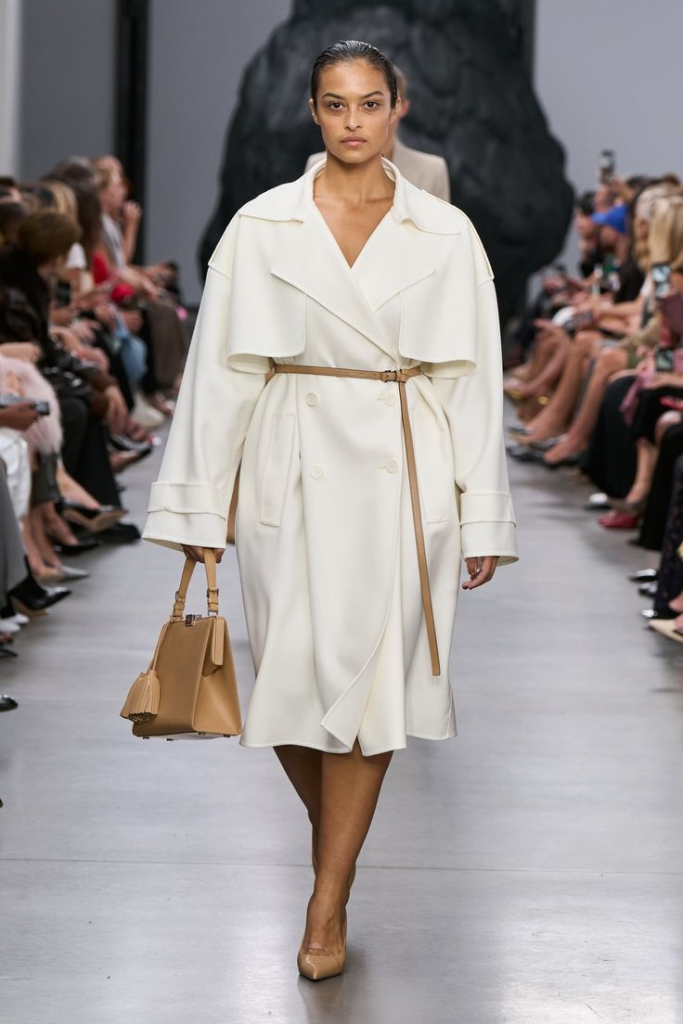
Why it resonates: Utility dressing has deep roots in mid-20th-century workwear and wartime restrictions. The U.K.’s Imperial War Museums archive explains how “utility” once meant rationing and durability; fashion keeps elevating those codes—shape memory fabrics, tonal palettes, refined trims. The result is pragmatic, but chic.
- Styling tip: Counterbalance a boxy jacket with something tender (silk tank, pencil skirt) to avoid blocky lines.
- Footwear: Sleek pumps or almond-toe boots elevate cargo or flight details instantly.
- Fit check: Utility jackets should skim shoulder and hip; if it swallows you, tailor the sleeve and hem.
Runway receipts: Michael Kors Collection, SIMKHAI, Coach, plus market context via The Business of Fashion.
3) Double Belts: Structure, squared
Layered belts were everywhere—delicate chains over leather at Area, metallic cinchers over fluid gowns at Brandon Maxwell, and easy double-leather stacks at Ralph Lauren. This is less “trend” than a technique: a second belt adds proportion, creates negative space, and makes soft garments read intentional, not slouchy.
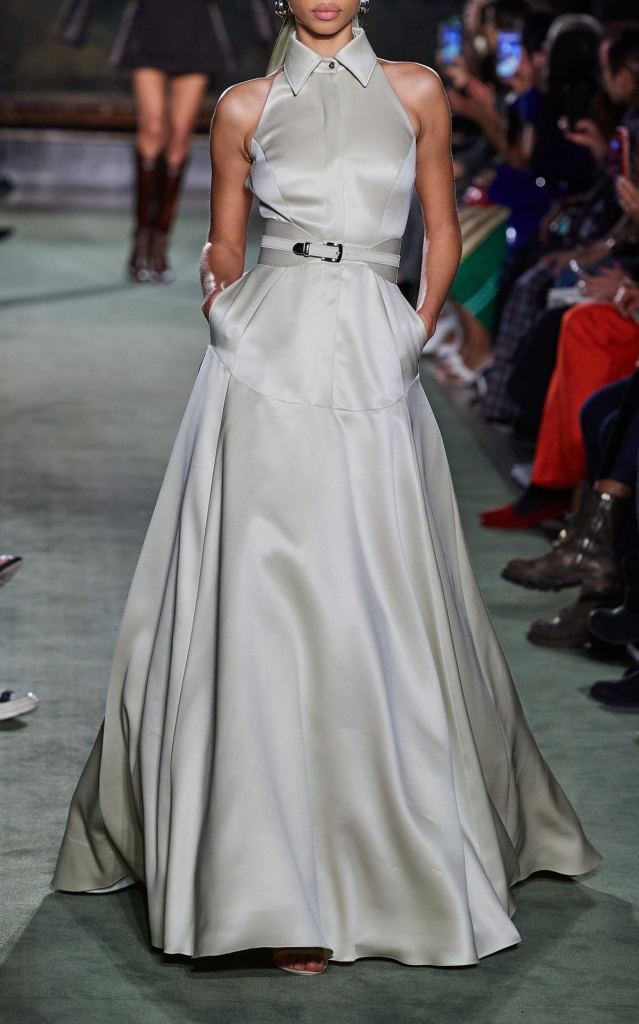
How to get it right:
- Keep widths contrasting (one skinny, one mid) so they don’t fight each other.
- Match metals to jewelry; repeat the hardware tone once elsewhere (earrings, bag zip) for coherence.
- Tension is everything: floaty dress + structured belts; slouchy trouser + slim stacks. If both pieces are soft, it reads messy, not minimal.
Receipts: Area, Brandon Maxwell, Ralph Lauren. For street-style validation, skim NYFW belt layering in Vogue’s street style coverage.
4) Organza: Sheer, structured, and smarter than it looks
Organza—a crisp, plain-weave fabric historically made of silk, now also spun in polyester/nylon—was the season’s stealth power move. Khaite pushed opacity/clarity in a sculptural white gown; Grace Ling softened traditional suiting with a translucent blazer; Brandon Maxwell tucked organza inserts into a minimal navy set for air and line, not just drama. The fabric’s secret sauce is its stiffness: you get shape and shadow at once.
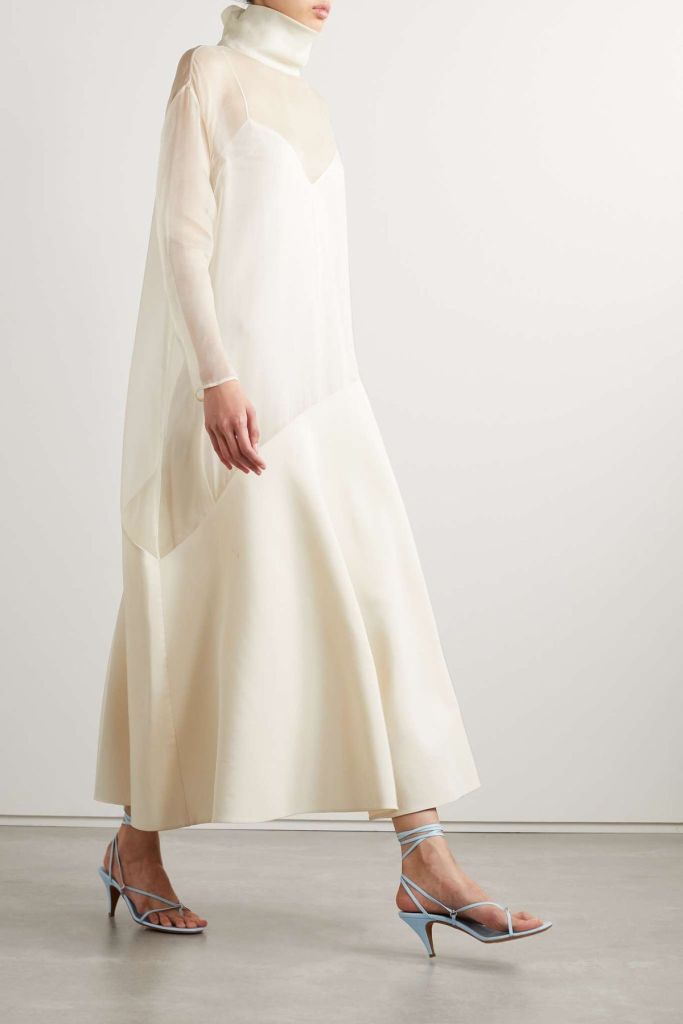
Facts check: Organza’s characteristics—sheerness, crisp “hand,” and ability to hold volume—come from tightly twisted yarns in a plain weave; see Britannica for a tight definition. Pairing it with matte, denser weaves (gabardine, leather) highlights its geometry rather than skin, which, tbh, is what makes it look expensive rather than over-exposed.
- Office-safe sheer: organza overshirt over a tonal camisole; hem aligned, not cropped.
- Care note: silk organza is delicate—avoid rough bags and jewelry; most pieces are dry-clean only.
- Fit tip: watch armholes; stiff fabrics can cut in at the underarm—sizing up and tailoring is fair game.
Receipts: Khaite, Grace Ling, Brandon Maxwell.
5) Oversize Oxblood Bags: The power color for pragmatists
Accessories packed the season’s most practical punch: extra-large totes and slouchy pouches in oxblood—a deep red-brown that plays with nearly every neutral. Tibi showed a clean, squared tote; Tory Burch ran sculptural half-moons; Coach leaned into a relaxed, dumpling-adjacent carryall. Oxblood’s strength is its versatility: it harmonizes with navy, gray, camel, denim, black, and olive in a way true red rarely does. The color meaning may vary, but even dictionaries agree on its identity; see Merriam-Webster for the straightforward definition.
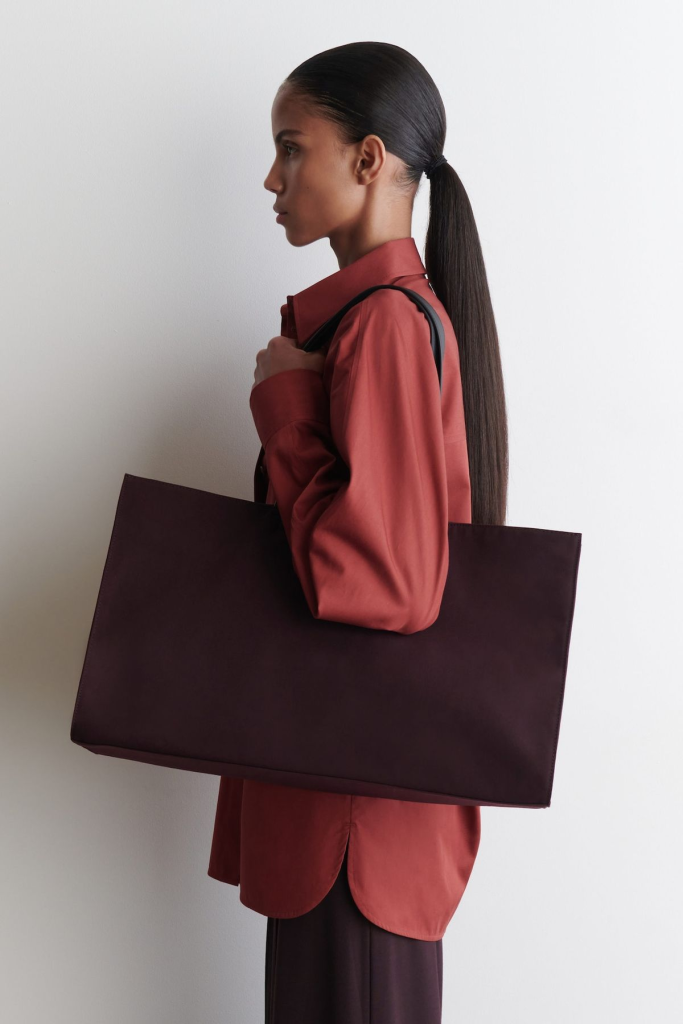
- Work-life math: Look for 40–45 cm width to fit a 13–14″ laptop; weigh the bag empty—heavy leather + hardware can exceed 4–5 lbs fast.
- Minimal outfit, maximal bag: jeans + tee + oxblood tote = intent without fuss.
- Care: darker leathers hide scuffs better; condition sparingly to keep structure.
Receipts and market context: Tibi, Tory Burch, Coach. Big-bag resurgence covered in The Guardian and (industry-side) Vogue Business.
How to translate the runway into your week
- Monday (desk to drinks): Slim black trouser + white tank + navy blazer + fringed scarf + loafers + oxblood tote. Add one skinny metallic belt over the blazer for a fast nip-in.
- Tuesday (client lunch): Khaki field jacket + silk midi skirt + kitten heels + chain-over-leather double belts. Earrings in the same metal as your chain.
- Wednesday (creative meeting): Organza button-down over matching camisole + dark jeans + pointed boots. Keep the bag structured so the outfit doesn’t float away.
- Thursday (date night): Leather pencil skirt + soft-yellow fringed knit + slingbacks. Tiny belt stack at the waist; red-brown lip to echo the bag.
- Friday (casual): Slouchy trouser + fitted tee + double leather belts + clean sneakers + dumpling pouch. Tuck the tee; half-tuck is fine, but don’t overthink it, definitly.
Smart shopping notes (from Jilly’s very real-life week)
- Materials > logos: Crisp organza, sturdy tote leather, decent hardware—these outlast trends. For fabric basics, Britannica is a surprisingly useful quick reference.
- Secondhand is your friend: Find double belts and leather totes on reputable resale—The RealReal, Vestiaire Collective—to test-drive the look without full freight.
- Sustainability isn’t binary: If you’re choosing new leather vs. alternatives, read beyond marketing. The Textile Exchange and the Ellen MacArthur Foundation offer solid primers on circularity and material impacts.
- Tailor, don’t tolerate: Utility jackets and organza tops both benefit from small fit adjustments—sleeve, shoulder, hem—so they look intentional rather than “almost.”
What we actually saw (and how we kept ourselves honest)
We attended multiple New York shows and presentations this season and compared notes with official listings from the CFDA. Runway references above point to Vogue Runway and WWD galleries, which remain gold standards for show documentation. We’ve tried to focus less on novelty and more on utility: if an idea can’t survive a subway commute or a conference room, it didn’t make this list. If we missed your favorite look, that’s on me becuase my note-taking app crashed exactly once mid-show—nightmare fuel.
Final thought: Fashion gets loud; good style gets quiet. Pick one idea—fringe, a doubled belt, a crisp sheer layer, or an oxblood tote—and let it do the heavy lifting. The rest? Edit.


