


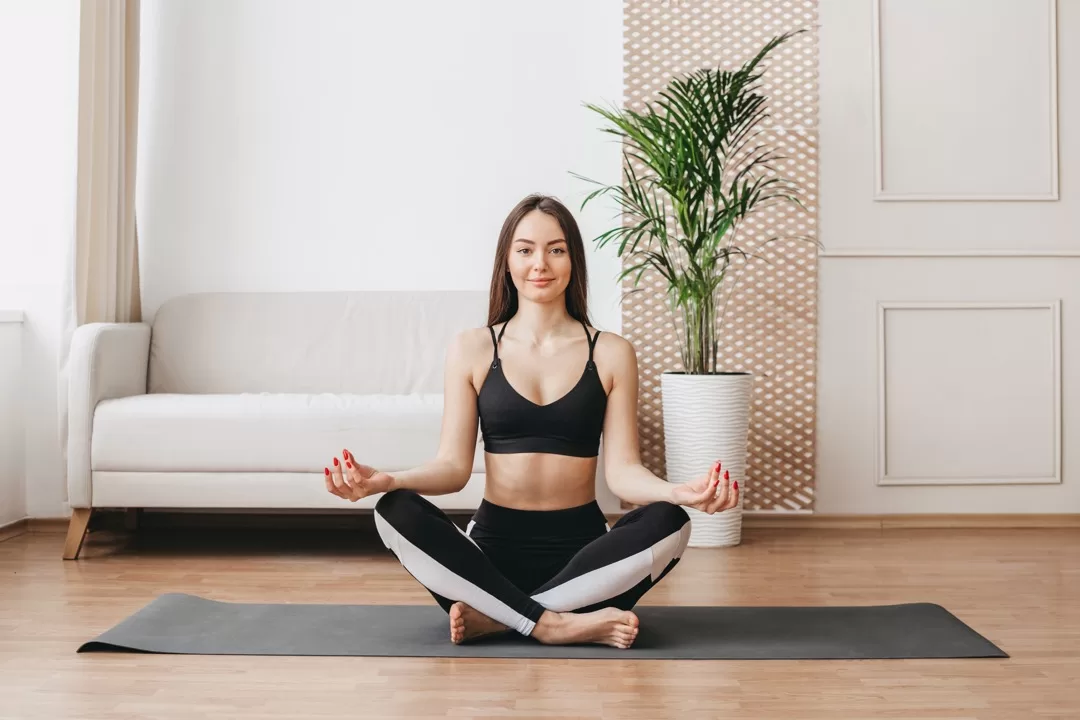
Like death and taxes, stress seems inevitable these days. Many of us cope by pouring a glass of wine, venting to a friend, or opening a meditation app. Of those three, meditation is the one that keeps surprising researchers with how broad—and measurable—its benefits can be. Below, I’ll unpack what actually changes when you meditate, why it matters for your brain and body, how much time it really takes (spoiler: it doesn’t have to be 20 minutes twice a day), and a simple 5-minute routine you can try tonight. I’ll also share where the evidence is strong, where it’s still emerging, and a few mistakes I made early on.
The short version: what meditation tends to change first
When you meditate regularly, three shifts commonly show up:
- Brain pathways involved in attention and emotion regulation get stronger, while mind-wandering circuits quiet down [PNAS; Psychiatry Res Neuroimaging].
- Your body shifts into a parasympathetic “relaxation response” more easily—lowering heart rate and blood pressure and improving breathing patterns [Harvard Health; AHA Scientific Statement].
- You become better at noticing urges and emotions without reacting, which is the core skill that spills over into sleep, focus, relationships, and even pain [JAMA Internal Medicine; JAMA].
Let’s go deeper, one benefit at a time—and how to put it to work in normal life (e.g., at 10:47 p.m. when your brain won’t shut off).
1) Meditation literally reshapes key brain circuits
We won’t go full neuroscience textbook here, but the data are compelling. Magnetic resonance imaging (MRI) studies show structural and functional changes after consistent mindfulness training. For example, participants in an 8‑week program showed increased gray matter density in regions related to learning, memory, and emotion regulation (hippocampus, posterior cingulate, temporo‑parietal junction) [Hölzel et al., 2011]. Functional studies also find reduced activity in the brain’s default mode network (the “mind‑wandering” system) among experienced meditators [Brewer et al., 2011].
Translation: the brain gets better at paying attention to what you choose, and at not spiraling when a stressor hits. That can feel subtle at first—like a half‑second of extra space before a reaction—but that tiny gap is the game-changer.
2) It doesn’t just reduce stress—it changes your physiology
Cardiologist Herbert Benson popularized the “relaxation response,” a physiological shift opposite to fight‑or‑flight: heart rate slows, breathing deepens, and blood pressure trends down [Harvard Health]. Decades later, the American Heart Association reviewed the evidence and concluded that meditation may help reduce cardiovascular risk, particularly as an adjunct to lifestyle changes [AHA, 2017].
Is meditation a replacement for antihypertensives or statins? No. But paired with sleep, movement, and nutrition, it’s a low‑risk lever with a decent upside. I’ve seen patients go from 145/90 to the mid‑130s after 8–12 weeks while also walking more and cutting late‑night doomscrolling—so it’s a package deal, honestly.
3) You may feel (and act) more compassionate
Multiple studies report increases in empathy and prosocial behavior after compassion or loving‑kindness practices. In one experiment, just two weeks of compassion training increased altruistic giving and altered neural responses to others’ suffering [Weng et al., 2013]. Another line of work shows distinct brain plasticity from compassion vs. empathy training, suggesting we can “train” warmth and care without burning out [Klimecki et al., 2014].
Informally? You’re less likely to snap at your mom after a day hunched over a laptop if you’ve practiced noticing tension and softening your response. I still fail at this sometimes—definitly not perfect—but the failures are shorter and kinder.

4) Focus improves, and resisting distractions gets easier
Mindfulness training has been shown to improve working memory capacity and test performance while reducing mind‑wandering [Mrazek et al., 2013]. Even brief integrative body-mind training boosted attention and self‑regulation in under a week [Tang et al., 2007].
Practically, that means you’re better at noticing “urge waves” (check email, watch the puppy video) without surfing them. That same skill is used in addiction treatment (“urge surfing”) to ride out cravings [MBRP review].
5) Sleep tends to get better (especially if your mind races at night)
A randomized clinical trial in JAMA Internal Medicine found that mindfulness training improved sleep quality and daytime impairment among older adults with sleep disturbances, outperforming a sleep‑education control [Black et al., 2015]. Mechanism-wise, meditation strengthens attentional control and reduces rumination, which is exactly what keeps many of us awake.
6) Posture and body awareness can improve (with a caveat)
Most traditions cue an upright, relaxed posture, and practices like body scan increase interoceptive awareness (sensing the body from the inside). While posture outcomes are less studied than, say, anxiety, many people report fewer “shrugged shoulders” moments and better ergonomics after a few weeks. Related research on mindfulness for chronic low back pain suggests function and pain can improve—likely via both attention and movement changes [JAMA, 2016]. Still, formal posture‑specific RCTs are limited, so consider this a promising, practical benefit rather than a guarantee.
7) Mental health: meaningful, not magical
Meta‑analyses show moderate improvements in anxiety, depression, and pain with mindfulness programs compared to usual care [Goyal et al., 2014]. That’s good—but not a miracle cure. Think “evidence‑based skill” you can layer onto therapy, medication, or coaching. The NIH’s National Center for Complementary and Integrative Health has a balanced overview of what meditation helps, and where evidence is mixed [NCCIH].
8) It takes practice (and yes, you absolutely get better)
Like knitting or learning to ski, you probably won’t feel like an expert the first time you try meditaton. The most useful mindset I’ve found: “every time you notice you’re distracted and gently return, that’s a rep.” Those reps add up. In brain terms, you’re strengthening the networks you want to use more and quieting the ones that pull you off task [Brewer et al., 2011].
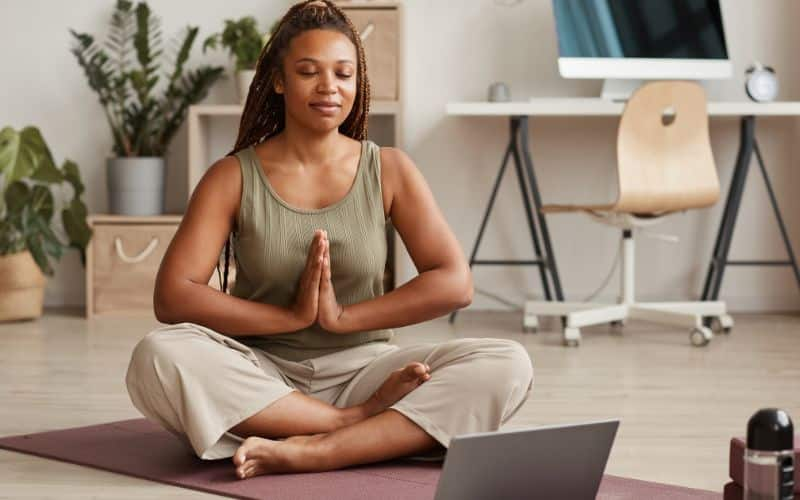
How long should you meditate? 5 realistic options
You might have heard “20 minutes after waking and 20 minutes before bed.” That’s one tradition (transcendental mantra styles often use this cadence). But benefits show up with shorter, consistent practice too. Pick one of these:
- Micro-doses: 3 minutes before meetings, 3–5 times a day.
- Daily 5: One 5‑minute sit after coffee.
- 10 for focus: 10 minutes at lunch (earbuds, eyes closed).
- Classic 20: 20 minutes in the morning or evening.
- MBSR style: About 30–45 minutes/day during an 8‑week course [UMass Center for Mindfulness].
Consistency beats intensity. I’d rather see you do 6 minutes daily than 40 minutes once on Sunday.
A 5‑minute “starter” practice you can try tonight
Set a timer for 5 minutes. Sit upright but comfortable, feet grounded or cross‑legged, spine long, shoulders soft.
- Minute 1: Feel the body. Where does the chair meet your legs? Jaw unclenched? Let the exhale be 10% longer.
- Minute 2–3: Choose one anchor (breath at the nose, or the rise/fall of your belly). When the mind wanders, note “thinking” kindly, and return. That gentle return is the practice.
- Minute 4: Widen attention. Notice sounds, temperature, contact points. Still breathing.
- Minute 5: Set an intention for the next hour. One sentence. Example: “When email pings, I’ll pause once before I click.”
If you prefer guidance, try free libraries like UCLA Mindful’s short recordings [UCLA Health] or the 8‑week, free Palouse Mindfulness program [Palouse Mindfulness].
Common obstacles (and what actually helps)
- “I can’t stop thinking.” Good—no one can. The goal isn’t zero thoughts; it’s noticing and coming back. That counts.
- “I fall asleep.” Try earlier in the day or sit more upright. Standing or walking meditation works too.
- “No time.” Pair 60 seconds with existing habits (after you lock your front door, before you open your laptop). Tiny is legit.
- “I’m doing it wrong.” If you noticed your mind drifted and returned even once, you did it exactly right.
Safety notes and who should get extra support
Meditation is generally safe, but not universally easy. A small subset of people may experience challenging emotions, anxiety spikes, or trauma memories. If you have active PTSD, severe depression, mania, or psychosis, work with a clinician trained in mindfulness‑informed approaches and go slowly. The NIH has a useful overview of safety and side effects [NCCIH]. If meditation consistently makes you feel worse, stop and consult a professional; there are other evidence‑based tools.
Evidence cheat‑sheet: where the research is strongest
- Stress, anxiety, depression: modest but meaningful benefits vs. usual care [JAMA Internal Medicine].
- Sleep quality: improved in randomized trials for insomnia and older adults with disturbances [JAMA Internal Medicine].
- Pain and function (e.g., chronic low back pain): improvements comparable to CBT in some trials [JAMA].
- Attention and working memory: improvements from brief to moderate training [Psychological Science; PNAS].
- Brain structure/function: changes in DMN, hippocampus, amygdala reactivity [PNAS; Frontiers in Human Neuroscience].
- Cardiovascular risk factors: supportive but mixed; best as part of a broader plan [AHA Statement].
For a broad, plain‑English overview, see the NIH’s meditation guide [NCCIH], and Harvard’s summary of the relaxation response [Harvard Health].
Bottom line
Meditation won’t erase taxes or traffic. But it does rewire attention, downshift your stress response, and make compassionate, values‑aligned actions slightly more likely—especially under pressure. Start small. Five minutes today beats an hour “someday.” And if you miss a day (you will), tomorrow is a clean slate.
None of this is a substitute for medical care. If you have specific conditions—cardiac, psychiatric, or chronic pain—loop in your clinician and use meditation as one tool in a broader, evidence‑based plan.
Further reading and sources:


